
OTFotf
All posts
Claude Code

Claude Code and Codex (GPT-5 High) with Vibecode

5 min
Claude Code and Codex (GPT-5 High) with Vibecode

A head-to-head comparison of Claude Code and Codex with practical Vibecode workflows. When to use each, and how to combine them for maximum productivity.

Tools Compared

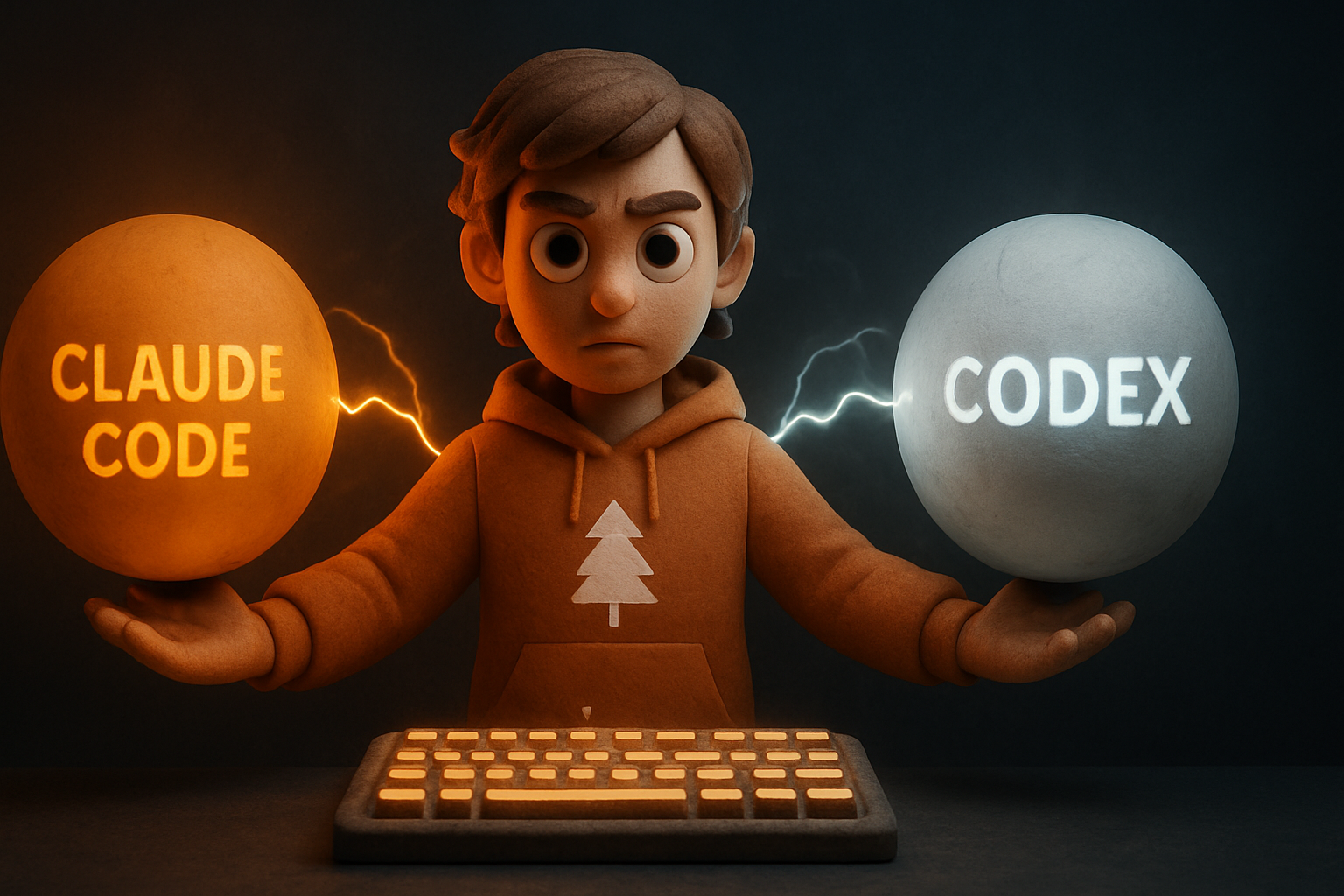
Riley Brown runs both Claude Code and OpenAI Codex (powered by GPT-5 High) in his daily workflow, using the Vibecode framework to coordinate between them.

Claude Code excels at understanding existing codebases, planning multi-file changes, and maintaining project context across long sessions. Its strength is deep, sustained coding work where architectural understanding matters.

Codex (GPT-5 High) brings exceptional raw code generation speed and strong performance on algorithmic problems. It's particularly good at generating code from scratch and handling well-defined, isolated tasks.

Vibecode provides the framework for coordinating AI coding tools — defining tasks, managing context, and chaining outputs between different AI models. Think of it as the orchestration layer that makes multi-tool workflows practical.

The Hybrid Workflow

How Riley combines both tools in a single development session.

1

Planning phase with Claude Code

Start each session in Claude Code. Describe the feature you're building. Claude Code reads the codebase, plans the changes, and outlines the implementation approach. Its deep context understanding makes it ideal for planning.

2

Isolated generation with Codex

For self-contained pieces (new utility functions, data transformations, API handlers), switch to Codex. Its speed advantage shines on well-defined, isolated tasks where it doesn't need to read the full codebase.

3

Integration back in Claude Code

Bring Codex-generated code back to Claude Code for integration. Claude Code handles the multi-file wiring — connecting the new code to existing components, updating imports, and fixing type mismatches.

4

Testing and refinement

Use whichever tool is faster for the specific fix needed. Claude Code for context-dependent bugs, Codex for straightforward test generation. The Vibecode framework manages the handoff between tools.

When to Use Which

Use Claude Code When...

The task requires understanding existing code, coordinating changes across files, debugging complex issues, or making architectural decisions. Claude Code's context management is unmatched for sustained work on a codebase.

Use Codex When...

The task is well-defined and isolated: writing a new function from a spec, generating tests, converting data formats, or implementing algorithms. Codex's speed and fresh-generation quality shine here.

Use Both When...

Building a significant feature that has both architectural complexity (Claude Code plans and integrates) and isolated components (Codex generates individual pieces). The hybrid approach is faster than either tool alone.

More Claude Code resources

On this page