Vercel Expands 'Agentic Infrastructure' with Stakpak Acquisition

Vercel just bought Stakpak — the Cairo-born, two-year-old team that built an open-source agent harness and a production-ready DevOps agent — and the move is a real bet, not a press release. An acqui-hire of an open-source agent team in a category that barely existed two years ago is exactly how a frontend cloud becomes a platform. The genuinely hard part isn't the agent loop; it's the "self-driving infrastructure" framing — agents deploying, agents managing infrastructure, developers building and running their own agents on top. That is a tall order and a real tailwind for anyone shipping software today.
George Fahmy, who founded Stakpak in 2023 and bootstrapped it from Cairo for close to two years before relocating to San Francisco, said it plainly in his LinkedIn announcement: "Vercel is no longer just the frontend cloud." The company, he wrote, is building "the Agentic Infrastructure company." That is a precise reframe and worth taking seriously.
What Stakpak actually shipped
Stakpak's claim was never "we have an AI agent." The category is too crowded for that sentence to mean anything. The specific bet was three pieces of open-source infrastructure working together:
- An open-source agent harness — the scaffolding an agent needs to plan, call tools, observe results, and iterate.
- A production-ready DevOps agent — the part that actually does the work: deploy, roll back, scale, recover.
- AI-enhanced security systems — the safety net that decides which actions an agent is allowed to take on real infrastructure.
That trio is the real product. An agent without a harness is a prompt with ambition. A DevOps agent without a security layer is a foot-gun with a JSON config. Stakpak shipped all three, kept them open source, and let the work speak.
The numbers back up the operating shape: in early 2025 the company closed a $500,000 round led by P1 Ventures, with Digital Currency Group, 500 Global, and Instabug co-founders Moataz Soliman and Omar Gabr participating. The team had said it was targeting $100,000 in annual recurring revenue, focused on the US market while keeping engineering in Egypt. That is a modest revenue baseline — the Vercel deal is closer to an acqui-hire in the agentic-infrastructure space than a traditional strategic acquisition, and the open-source projects are explicitly staying available.
What "agentic infrastructure" actually means
Vercel is best known as the frontend cloud. The Stakpak deal, paired with Vercel's recent acquisition of Ethiopian-founded Better Auth from developer Bereket Engida, signals a deliberate pivot. "Agentic infrastructure" is the working term: a platform for developers to create, deploy, and manage AI agents, where the infrastructure itself is increasingly managed by those same agents.
In practice that means three concrete shifts:
- Agents are first-class deploy targets. Not "a chatbot that calls an API" — a long-running process with memory, tools, and a lifecycle.
- The runtime is agent-shaped. Tool-call loops, plan / observe / replan, structured observation, recovery from partial failure.
- The platform operates on the agent. Provisioning, scaling, and policy enforcement move from human-run runbooks to agent-driven workflows, with the human in the approval loop rather than at the keyboard.
This is genuinely hard. Most "AI DevOps" today is a wrapper that calls kubectl for you. Stakpak's bet was that the hard part is the harness, the security layer, and the observability around the agent — not the model.
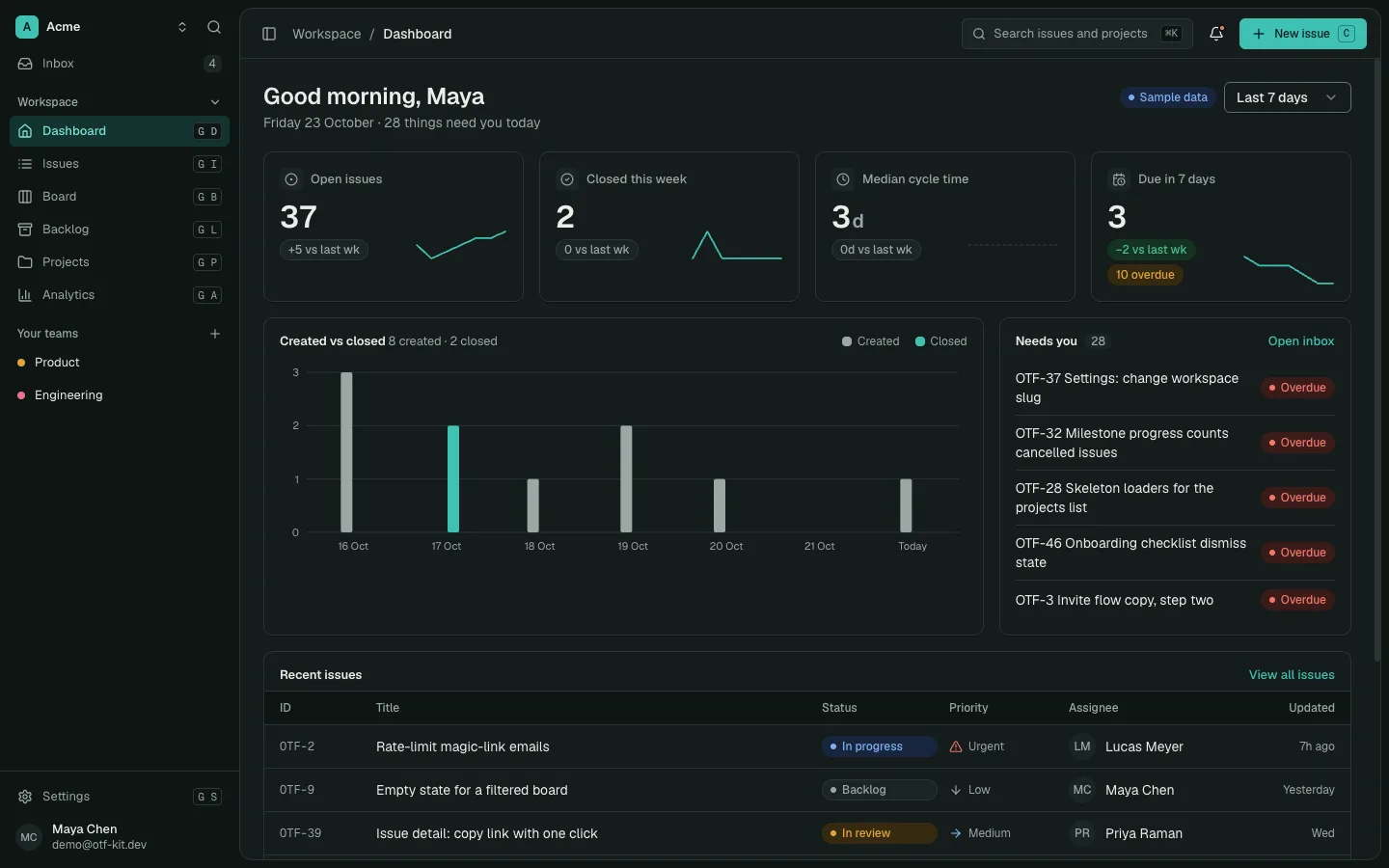
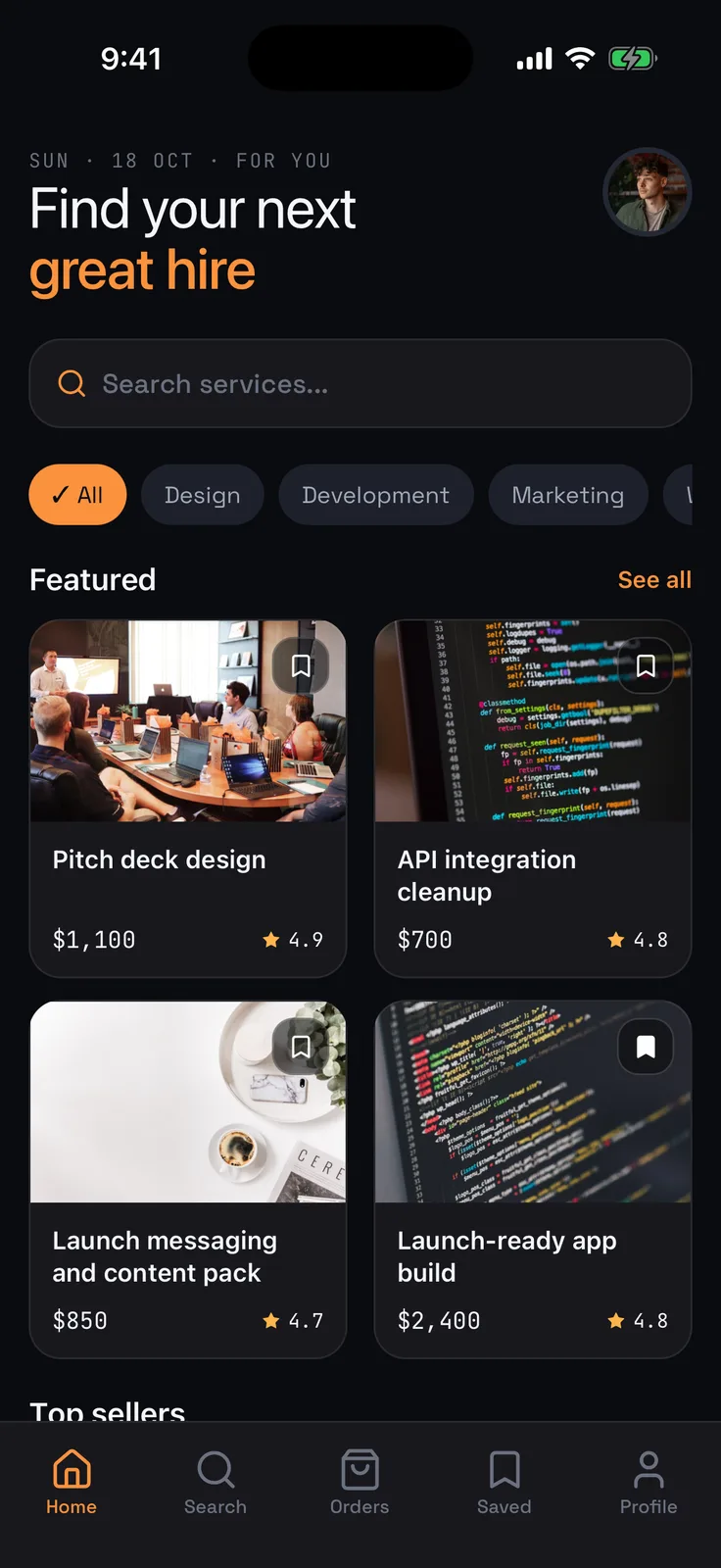
11 production screens. Login and database wired.
The SaaS Dashboard Kit includes login, a database, and a working dashboard. Live demo at saas.otf-kit.dev.
Why this is a real bet, not a press release
Two acquisitions of African-founded infrastructure startups within days is a pattern, not a coincidence. The pattern reads as: Vercel wants to own the agentic layer end-to-end, and the fastest way to do that is to buy teams that have already shipped the open-source primitives. Stakpak's bootstrapped-from-Cairo origin matters less than the fact that the team had already built, dogfooded, and shipped the three pieces in production. P1 Ventures, DCG, 500 Global, and the Instabug co-founders writing checks at $500k is a small round, but it bought two years of real engineering against a real agent runtime.
The risk is the usual one for acqui-hires: a small team absorbed into a large platform can lose the velocity that made the open-source work good in the first place. The fact that the open-source projects remain available is the part to watch. If they keep shipping outside Vercel, the deal works for the ecosystem. If they quietly deprecate, it works for Vercel only.
Try it today
The Stakpak open-source projects remain available — the agent harness, the production DevOps agent, and the AI-enhanced security systems continue to ship as open source. The natural starting points:
- Read the agent harness source before you run anything. The plan / observe / replan loop is the part to understand. Everything else is configuration.
- Run the DevOps agent against a non-production account. Watch what it tries to do, then read the security layer to see what it was and wasn't allowed to attempt. That gap is the actual product.
- Wire the agent into a real workflow — a deploy, a rollback, a schema migration — and treat the runbook as the test fixture.
Vercel has not yet shipped a native Stakpak integration. If you deploy on Vercel today, the honest move is to run the Stakpak agent alongside the platform, not inside it. When Vercel ships first-class hooks, the runbooks you already wrote carry over.
// The shape of the agent loop Stakpak builds on
async function run(plan: Plan, env: Environment) {
  while (!plan.done()) {
    const action = plan.next()                // what the harness decides
    const result = await env.execute(action)  // gated by the security layer
    plan.observe(result)                      // update plan from outcome
  }
}
A Vercel-native vercel agent deploy is the obvious end state, but it isn't here yet.
The part that doesn't change when the agent does

Agentic infrastructure changes how software gets built and shipped. It does not change what the user touches. The component that renders the deployment status, the rollout timeline, the rollback confirmation — that has to look and behave the same on web, on iOS, and on Android, in the same release, without a per-platform rebuild. When the agent is shipping every ten minutes, the UI cannot be the six-week cross-platform port at the end of the cycle.
That is the durable layer underneath the agent churn. One component API across web and mobile means the agent's output and the user's experience stay in lockstep, regardless of which model, harness, or cloud wins the next quarter. Stakpak's agent will look different in a year. The cross-platform component contract that surfaces the agent's actions to a real human on three platforms should not.
What to watch
Three things, in order:
- Open-source velocity. Does the harness still get commits outside Vercel?
- Vercel-native hooks. When does the agent appear in the Vercel dashboard as a first-class object, not a sidecar?
- The next acquisition. Two African-founded infra deals in days is a tempo. The third will tell us whether this is a category play or a moment.
The agentic-infrastructure category is real, the open-source primitives now live inside one of the largest frontend platforms on the internet, and the runbooks you write against them today will outlive whichever model you're running next month. Use it.
Ship the product, not the setup.
- 11 production screens — auth, team, analytics, and settings
- Login and a real database are wired in
- AI configs pre-tuned so your agent extends instead of regenerates
Ship your first screen tonight — free starter in your inbox
The quickstart, the SDK repo and the live kit demos, on this screen and in your inbox.
No spam. Unsubscribe any time.