Claude Opus 5: change AI with Half the Cost

Claude Opus 5 dropped on Friday at half the price of Fable 5, and it's already the default engine on Claude Max, the premium tier on Claude Pro, and live on GitHub Copilot. That is the line worth sitting with. Not the model tier. Not the leaderboard. The fact that near-frontier reasoning just became the option most senior engineers already pay for.
Claude Opus 5 is Anthropic's newest flagship model, and the Claude Opus 5 release features that actually change how a coding agent behaves at 2am are three: proactive reasoning, self-correction, and tool creation. The model is positioned as the workhorse for daily enterprise workloads — autonomous coding, financial modeling, legal research, scientific research — at near-frontier performance and roughly half the operating cost of Fable 5.
This is a real tailwind. Cheaper frontier-class reasoning means more agents in more loops, more drafts per hour, more willingness to spin up a sub-agent for the boring cleanup. If you ship software, you should want this. Let's look at what it does, where it fits in the lineup, and the part underneath that doesn't change when the price tier does.
What Claude Opus 5 actually does
Three capabilities, all named in the launch coverage, that matter more than any single benchmark score.
Proactive reasoning. Opus 5 plans before it types. In early testing reported by Anthropic, the model caught logical faults during planning phases, which translated into cleaner code changes and fewer manual interventions from the human reviewer. That's the failure mode that kills coding agents in practice — not bad syntax, but bad premises that survive three rounds of edits before anyone notices. A planner that fails loudly is worth more than a coder that fails silently.
Self-correction. Not a wrapper, not a regex on stderr. The system built isolated test environments to independently verify code as part of its own loop. That is the difference between a model that hallucinates a green test suite and one that runs the test against a sandbox it provisioned itself. Sandboxed self-verification is the closest thing the field has to a regression test for the model itself.
Tool creation. This is the bit worth underlining. The model constructed custom computer vision pipelines to analyze engineering drawings — not because it was told to, but because that was the tool the task required. A coding agent that can invent the tool it needs is qualitatively different from one that picks from a fixed catalog. The catalog is what gets stale.
The benchmarks that matter
Two evaluations get called out in the launch coverage, and they cover the two jobs Opus 5 is being sold for.
Frontier-Bench (software engineering). Opus 5 set a new state-of-the-art here, per Anthropic. This is the eval that measures end-to-end engineering tasks — the kind that span multiple files, require running code, and demand a passing test suite.
GDPval-AA (knowledge work). Also new state-of-the-art, per Anthropic. This is the eval for the enterprise side: financial modeling, legal research, the structured analytical work a knowledge worker would otherwise bill hours against.
Both numbers come from Anthropic's own reporting, so treat them as vendor-supplied until independent reproductions land. The shape of the result — top scores across a wide range of analytical evaluations — is what you want to verify, not the precise figure. Vendor benchmarks are a map, not the territory.
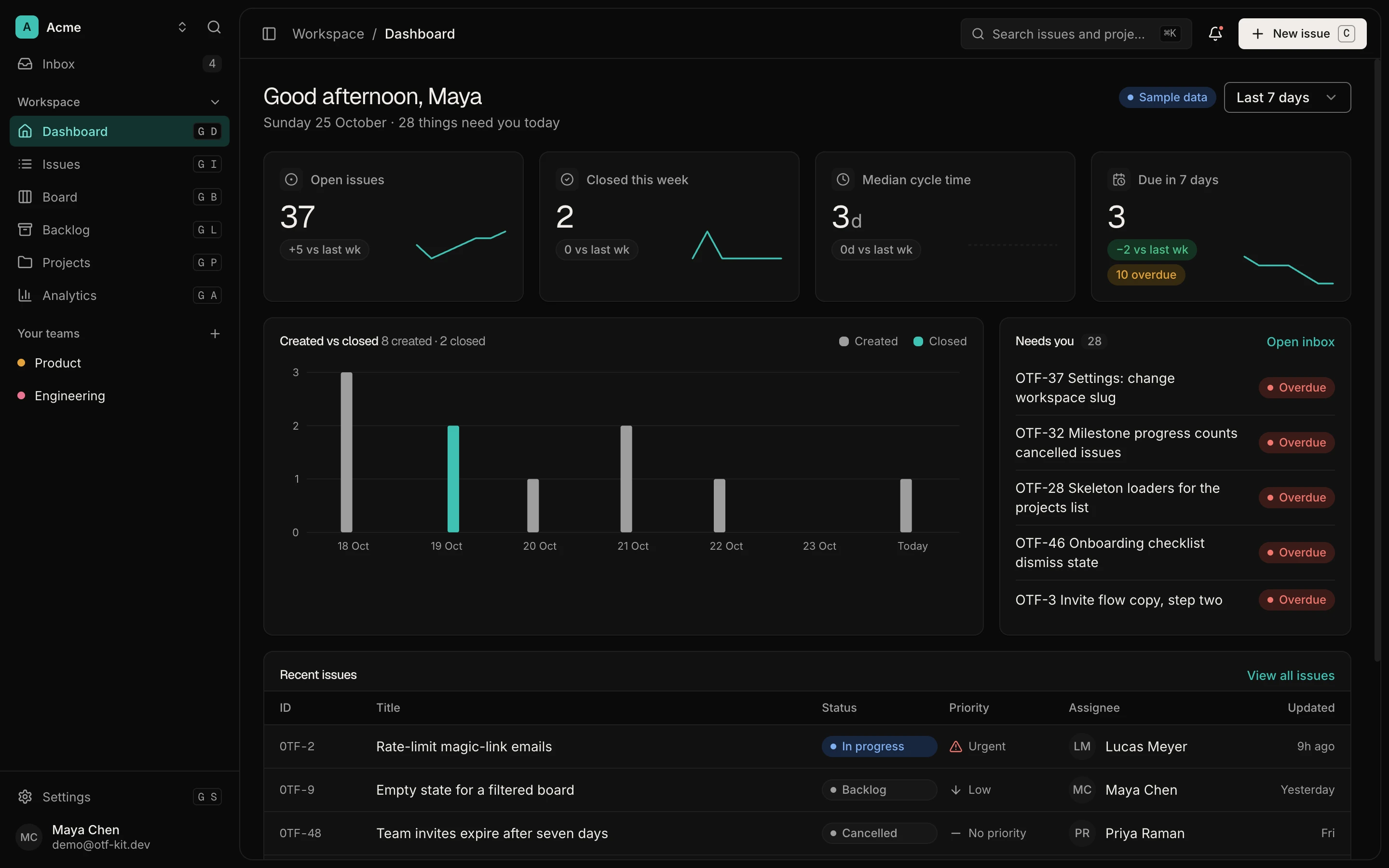
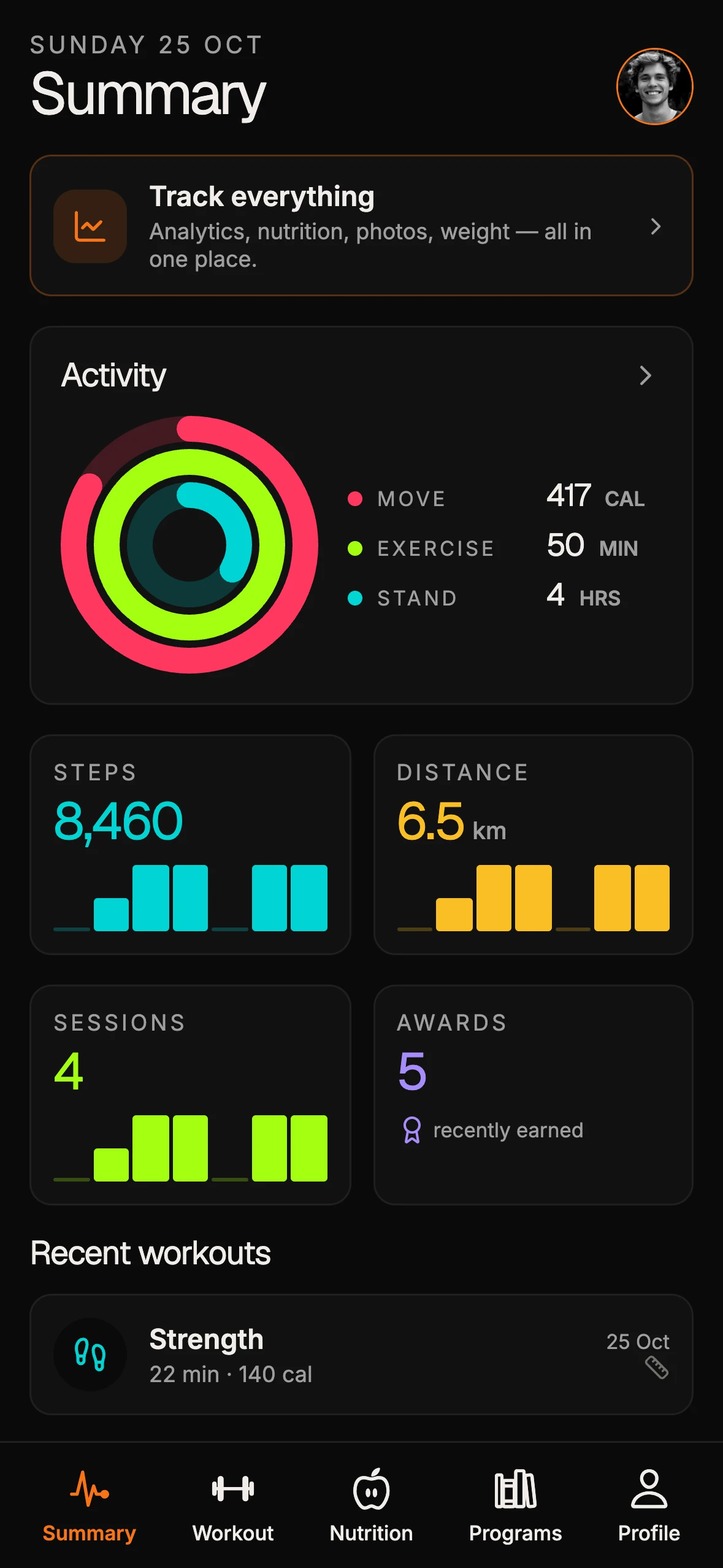
11 production screens. Login and database wired.
The SaaS Dashboard Kit includes login, a database, and a working dashboard. Live demo at saas.otf-kit.dev.
Half the price, and where Mythos 5 still wins
The pricing claim is straightforward: Opus 5 delivers intelligence approaching Fable 5 at half the financial cost. That's a 2× reduction in the per-token economics of running near-frontier reasoning on enterprise workloads.
The trade-off is explicit and worth respecting. Anthropic is keeping cybersecurity-focused workflows on its specialized Mythos 5 architecture. If your agent loop touches offensive security tooling, vulnerability research, or anything an auditor would label "red team," Opus 5 is not the engine you want running the show. Use Mythos 5 there. This isn't a weakness to apologize for — it's a routing decision, and good routing decisions are what make a model lineup coherent. Three models, three jobs, no overlap.
How to actually use this today
Three surfaces, all live as of the launch date, and all worth wiring up this week.
# Claude Max subscribers — Opus 5 is now the default engine.
# Open claude.ai; the model switcher shows Opus 5 first.
# No env var, no flag, no config file to edit.

# Claude Pro subscribers — Opus 5 ships as the premium tier.
# Pro users can flip between Opus 5 and the older Sonnet line
# in the model picker at the top of the chat.
For developers already living in GitHub Copilot, the rollout is the one that matters. Opus 5 is available across major developer platforms including GitHub Copilot, which means your existing seat, your existing keybindings, and your existing /fix and /tests commands now resolve to a cheaper near-frontier model without a config change. That's the friction-free path.
The honest how-to for adopting a new model is not "switch the default." It's three steps:
- Pin Opus 5 for one specific loop — agent refactors, test generation, docstring sweeps — and measure token spend against the previous default for a week. Cheaper per token is not the same as cheaper per task.
- Keep Fable 5 in the dropdown for the jobs where Opus 5 visibly fails. Frontier-tier is the fallback, not the upgrade.
- Re-run your evaluation harness. A 2× price drop invites a 2× increase in agent volume; make sure your latency budget still holds and your rate limits aren't suddenly the bottleneck.
The layer that survives the model churn
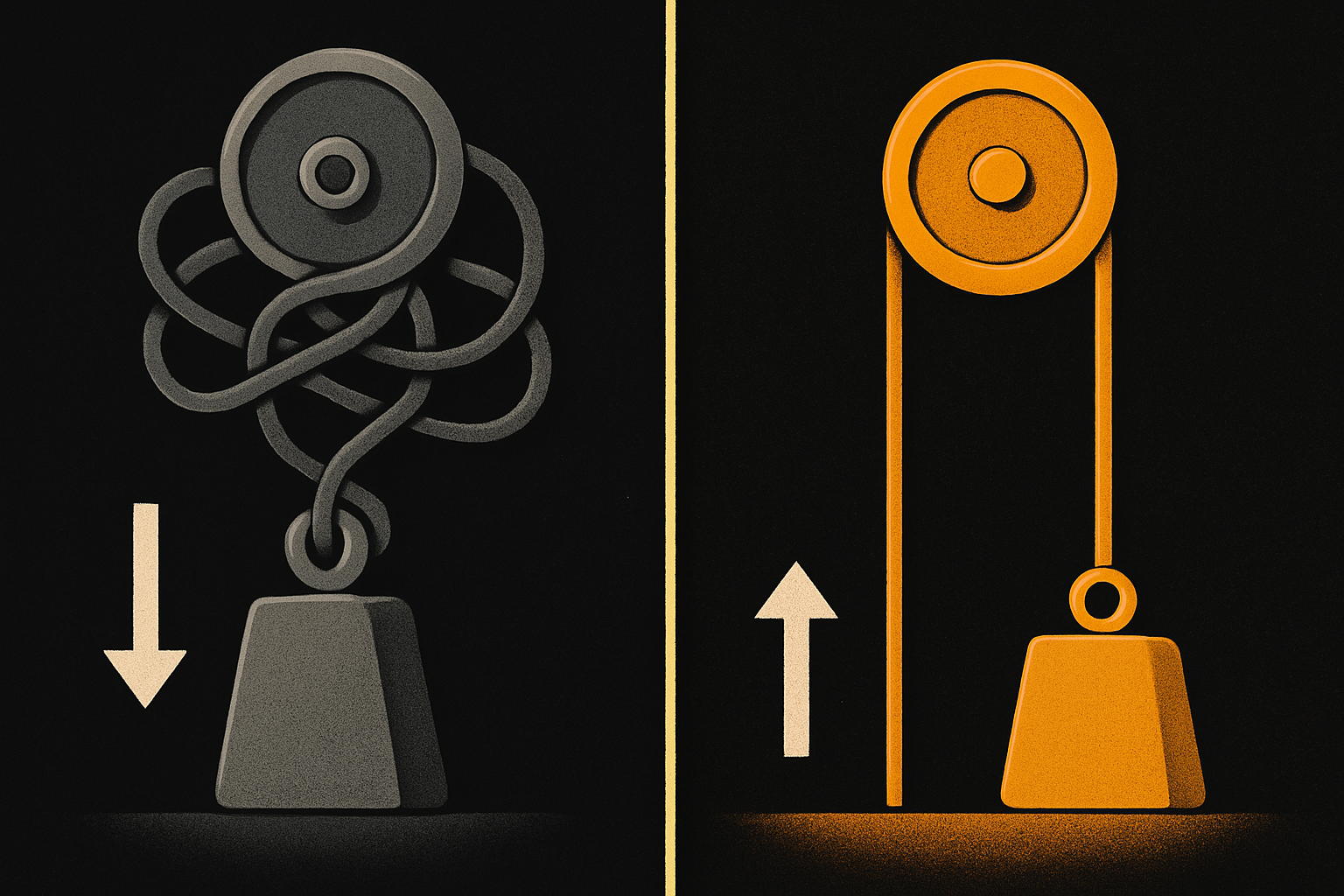
Every six months the frontier gets cheaper and the leaderboard flips. Fable 5 is the top tier today; Opus 5 is half the price and nearly as capable; whatever ships next quarter will undercut both. The thing that does not churn is the surface your code is rendering against.
When an autonomous coding agent builds a settings screen at 2am, the question is not which model wrote it. The question is whether the screen renders the same on web, iOS, and Android — same spacing tokens, same focus order, same keyboard semantics — without three separate definitions to maintain. That is the part the model does not give you for free, and it is the part you do not want to rewrite every time the pricing tier changes.

Use Opus 5. It is a genuinely better deal for the workloads it covers, and the GitHub Copilot rollout alone means most of you will touch it within a week whether you opt in or not. And pair it with a cross-platform UI layer that holds its shape across model swaps — so when the next half-price flagship lands next quarter, the components still look like your components, not like whatever the agent guessed this morning. The model gets cheaper. The surface stays yours.
Ship the product, not the setup.
- 11 production screens — auth, team, analytics, and settings
- Login and a real database are wired in
- AI configs pre-tuned so your agent extends instead of regenerates
Ship your first screen tonight — free starter in your inbox
The quickstart, the SDK repo and the live kit demos, on this screen and in your inbox.
No spam. Unsubscribe any time.