Lovable alternatives: when the MVP tool should not own your repo

Lovable markets itself as an AI software engineer: chat in natural language, get a working web app, preview it, and publish without wiring hosting yourself. The product docs back the generous reading — projects are standard Vite + React, you own the code and data, Git sync is available, and Lovable's managed Cloud is the recommended default while you iterate. For a founder who needs a buyer-facing MVP URL before the week ends, that package is a real speed win, not vapor.
The decision this post answers is narrower. You already use Cursor or Claude Code. You can get a Lovable MVP live. The question is whether the long-lived system of record should stay a Lovable project (chat + Cloud + publish) or become an owned kit repository those filesystem agents keep editing after the demo stops being the product.
Lovable's documented loop, in plain terms
Lovable's pricing FAQ and ownership docs describe a single workspace loop:
- Chat drives builds; credits meter chat work, Cloud runtime, and AI features inside the apps you ship.
- Free workspaces get daily build grants plus monthly Cloud grants; paid plans add a monthly credit balance on top of grants.
- Publish lands on Lovable hosting (custom domains, SSL, managed backend) so preview and production stay in one environment.
- Exit options are first-class: Git sync to your provider on all plans; full zip download on paid plans; Free plan code editing stays read-only.
A practical first session:
open lovable.dev
→ chat one vertical slice (one screen + one write path)
→ publish when the URL is worth sharing
→ connect Git sync if engineering needs a mirror
→ list leftovers that must live in YOUR IdP / billing / store accounts
That leftover list is usually where Cursor and Claude Code re-enter the story. Lovable can own the demo. Your agents still need a tree shaped for the product you intend to keep.
What the sandbox is excellent at
Appraise the innovation before arguing with it. Lovable compresses editor + agent + preview + host into one surface. Non-developers can ship a credible web MVP. Paid editors can tweak files in-product. Git sync means files can leave at the transfer layer. Lovable's own adoption path says start simple, sync when collaboration needs it, and move infrastructure only when a real constraint appears — which is honest product advice for validation.
Stay on Lovable when:
- The near-term artifact is a published web MVP on Lovable hosting/Cloud.
- The team's daily loop is Lovable chat, not a laptop agent on disk.
- Git sync or a paid zip is enough for review, and you are not yet asking agents to own migrations, webhook billing, or multi-surface clients for six months.
Sister posts cover adjacent angles you should not confuse with this one: the export refactor path in how to download a Lovable project and prep the code for agents and the meter math in the real cost curve from vibe-coded MVP to production. This page is only the system-of-record decision.
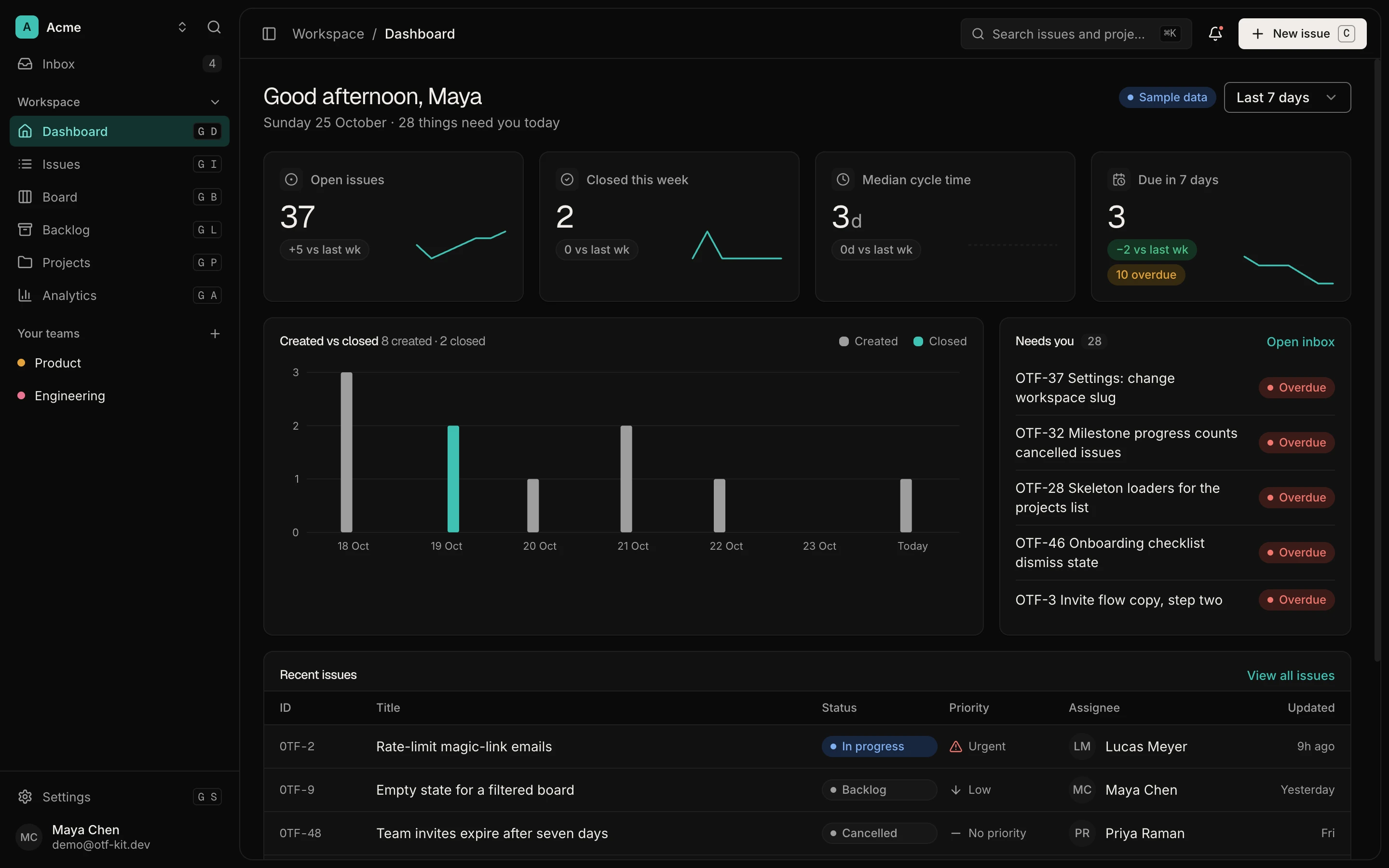
12 production screens. Login and database wired.
The SaaS Dashboard Kit includes login, a database, and a working dashboard. Live demo at saas.otf-kit.dev.
What an owned kit changes for Cursor and Claude Code
A filesystem agent compounds on durable files: project memory, cursor rules, task prompts, schema, and ship scripts. OTF kits deliver that shape as the purchase — editable source in a repository you control, with agent configs already present so Cursor and Claude Code follow conventions instead of regenerating a new house style every session. The AI tool overview documents kit configs for Claude Code, Cursor, and related agents; the kit is the context, not a chat transcript.
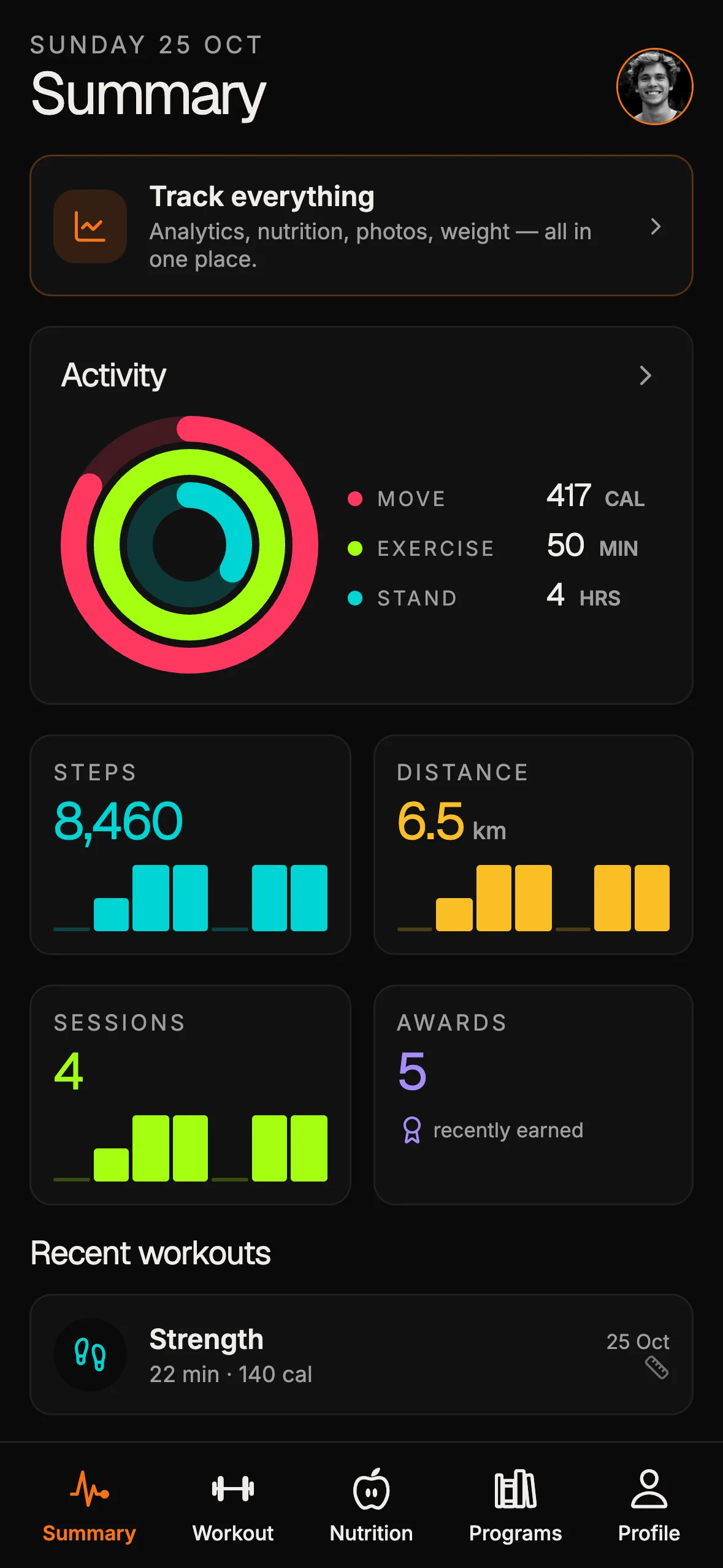
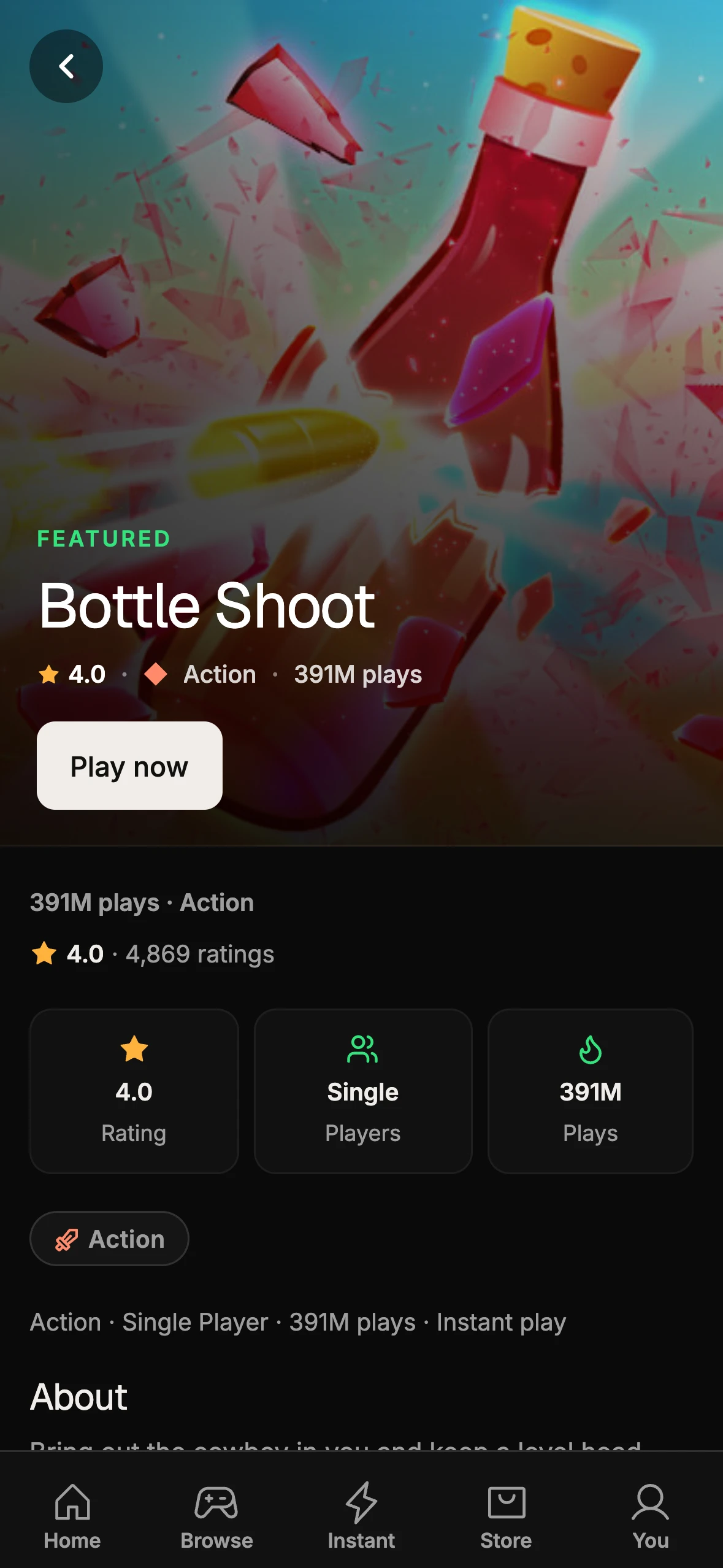
The SaaS Dashboard, Fitness and Arcade kits each ship CLAUDE.md and .cursorrules, plus 22 to 27 task prompts. None ships a lovable.md file.
Prefer the kit when most of these flip true:
- Maintenance will happen in Cursor/Claude Code on a laptop more than in Lovable's editor.
- You need tenant models, webhook-verified billing, or multi-surface clients that outgrow everything on Lovable.
- The buyer artifact must be a monorepo on day one, not a hosted project you might export later.
- You refuse to dual-write schema/auth across a sandbox and a separate production tree.
For the sandboxed-agent class with different exits, see Bolt Cloud hosts the preview; a kit is the repo Cursor keeps editing and Emergent ships fast previews; a kit owns the production repo you keep. The shared thesis across that catalog is not that builders are bad. It is: pick the artifact your agents can still open next quarter.
Decision map

Lovable owns the chat-to-published-MVP lane; a kit owns the buyer monorepo Cursor and Claude Code keep shipping.
| Question | Answer points to Lovable | Answer points to a kit |
|---|---|---|
| What must exist Friday? | Public Lovable URL | Cloneable product repository |
| Who edits daily after launch? | Lovable agent + browser IDE | Cursor / Claude Code on disk |
| Where do auth and data live? | Lovable Cloud (documented default) | Accounts and hosts you operate |
| What is continuity? | Chat history + project + Git sync | In-repo agent docs and conventions |
| What does own mean here? | Code/data rights + optional export | Production-shaped tree from day one |

Source: Lovable's public homepage, captured 2026-09-11.

Handoff is not download-files-and-hope. It is moving the system of record to a kit tree agents already know how to extend.
Lovable residual work. Anything that must match infra outside Lovable — existing identity provider, billing webhooks you already operate, store pipelines, durable on-disk agent house style.
Kit residual work. Product-domain customization on a skeleton that already expects auth, billing outcomes, and agent conventions — not inventing that skeleton from an export.
How to sequence without rewriting twice
- Earn the URL in Lovable — one vertical slice, publish only when stakeholders will actually click it.
- Freeze entities — roles, tables, payment events that survived review. Write them down outside the chat.
- Choose the system of record once — either commit to Lovable hosting/Cloud with Git sync as the engineering mirror, or implement the frozen model on a kit your Cursor/Claude Code workflow expects.
- Ban dual-write — one schema, one auth story. Parallel Lovable + kit trees is how months disappear.
If you already sync to Git for review, keep that habit. Just name whether production truth lives in Lovable or in the kit.
Pick the artifact
Lovable is a strong sandboxed builder for web MVPs: chat-to-app, Vite + React output, code ownership, Git sync, paid zip download, managed Cloud, and a credit balance spanning build, hosting, and in-app AI — per lovable.dev and docs.lovable.dev. Use it when the win is a published MVP this week.
An owned kit is a different purchase: the repository Cursor and Claude Code keep opening after the sandbox did its job. Use Lovable to prove the idea. Buy the kit when the idea has to become a product tree you still own.
Lovable alternatives, by what you need to own
People searching for Lovable alternatives usually want one of two things: a hosted builder that runs the preview, or a repository they keep. The table covers the options we have compared in full. Each row links to that comparison, and the question tells you what to settle before you pick.
| Alternative | Our comparison | Question to settle first |
|---|---|---|
| Bolt.new | Bolt.new alternatives: choose a path to ship a production app and Bolt Cloud hosts the preview | Who hosts the preview once the demo is live? |
| v0 | Prompt-to-Vercel with v0 is not the same as owning a production kit | Where does the deploy run, and who holds the repo? |
| Emergent | Emergent ships fast previews; a kit owns the production repo you keep | Is the fast preview also the production path? |
| Rork | Rork credits vs a fitness kit your Cursor agents keep | How do credits meter the agent's work? |
| Replit | Replit Agent credit pool costs | What does a heavy week cost on your plan? |
| An owned kit (OTF) | OTF pricing | Do you need the repo on the first day? |
Our rule: a hosted sandbox is fine while the vendor running the preview is acceptable for the stage you are at. Once the product has to outlive the demo, pick the repository.
Sources
Lovable pricing: positioning, ownership FAQ, credit model, free and paid grants.
Lovable deployment, hosting and ownership: code and data ownership, Git sync, Vite + React, Cloud and self-managed paths.
Lovable code mode: editor, paid edit, zip download, Git sync on all plans.
OTF AI tool overview: kit agent configs for Cursor and Claude Code.
Ship the product, not the setup.
- 12 production screens — auth, team, analytics, and settings
- Login and a real database are wired in
- AI configs pre-tuned so your agent extends instead of regenerates
Ship your first screen tonight — free starter in your inbox
The quickstart, the SDK repo and the live kit demos, on this screen and in your inbox.
No spam. Unsubscribe any time.