
AI Coding Agents Graduate to Full-Stack Workflow Integration

The repo-wide, multi-step shift actually shipped
July 16, 2026 was a quiet turning point. Multiple AI vendors cut upgrades on the same day — Claude Sonnet 5, GitHub Copilot, and the rest of the field all pushed the same two moves at once: repository-wide context and multi-step tool invocation. Cost collapsed. Latency dropped. The tooling that was futuristic last year is now a line item.
That deserves a second of genuine celebration. Repo-wide context means the model sees your whole codebase, not a 200-line window. Multi-step tool invocation means the agent plans three moves ahead instead of guessing at the next token. When both land together, the failure mode that defined 2025 — hallucinated APIs that look plausible but don't compile — shrinks dramatically. The agent can read the actual convention in your repo and follow it.
This isn't a "the model is smarter" story. It's a "the model can finally verify against ground truth" story.
What actually shipped on the 16th
Three things changed in the same release window, and they compound.
Repository-wide context is now default. Claude Sonnet 5 and GitHub Copilot both expanded their working set from file-level snippets to full-repo scope. The implication is concrete: the model can now grep your monorepo, read the conventions in your shared package, and produce code that fits the house style without you pasting snippets into the prompt.
Multi-step tool invocation became standard. Instead of "write me a function," you can now say "find every endpoint that touches this table, write a migration, run the tests, and open a PR." The agent chains the calls itself, reads the tool output, and adjusts. This is the part that actually replaces workflow, not just keystrokes.
Cost collapsed. Latency dropped. Treat that as direction, not a receipt — the source doesn't quote multipliers. The point is: the unit economics flipped from "demo-grade" to "production-grade" in a single release cycle.
One number that did come from a source: 40% of enterprise applications will feature task-specific AI agents by the end of 2026, up from less than 5% in 2025 — from industry surveys tracking what developers actually report. A second number: 72% of agent-based AI is already in production. Not pilots. Production.
11 production screens. Login, database, payments — all wired.
The SaaS Dashboard Kit ships everything already connected. Nothing to set up. Live demo at saas.otf-kit.dev.
The validation problem is now the whole game
Here's where the honest senior-engineer note goes. The model got better. It didn't get correct. Hallucinations are down, not gone. The skill that mattered in 2025 — typing fast — matters less. The skill that matters in 2026 is knowing how to direct an agent, validate its output, and catch the moment it's confident and wrong.
That's a real shift. It's also a kinder shift. Less repetitive boilerplate. More "did this PR actually solve the problem" reasoning. The cognitive load moves up the stack, not down.
Hyperexponential — the example called out in the source — shipped an agentic underwriting pipeline that takes broker submissions from intake to decision-ready files. No human in the loop. That's not a demo. That's headcount being reassigned.
How to wire this into your workflow today
Skip the marketing pages. Here are the actual knobs.
GitHub Copilot: turn on repo-wide context
In your editor's Copilot settings, enable the repository-wide reference option (the exact label has been renaming month-to-month). Then drop a single conventions file at the repo root:
<!-- .github/copilot-instructions.md -->
This repo uses:
- pnpm workspaces
- One schema file per table, under db/schema/
- API routes under src/app/api/*, all returning validated JSON
- Tests colocated as *.test.ts next to source
That file is read on every prompt. It's the single highest-use place to encode convention.
Claude Sonnet 5 via the Anthropic SDK
The model name is claude-sonnet-5. Confirm the exact string in the SDK release notes when you upgrade — Anthropic renames routinely.
import Anthropic from "@anthropic-ai/sdk"

const client = new Anthropic({
  apiKey: process.env.ANTHROPIC_API_KEY,
})

const message = await client.messages.create({
  model: "claude-sonnet-5",
  max_tokens: 4096,
  tools: [
    { name: "grep_repo",  description: "...", input_schema: {...} },
    { name: "read_file",  description: "...", input_schema: {...} },
    { name: "run_tests",  description: "...", input_schema: {...} },
    { name: "open_pr",    description: "...", input_schema: {...} },
  ],
  messages: [{ role: "user", content: prompt }],
})
For agentic tool use, declare the tool schemas up front. The model now plans the full call sequence in one pass instead of re-asking each step.
Multi-step tool invocation in practice
The pattern that works:
const agent = new Agent({
  model: "claude-sonnet-5",
  tools: [grepRepo, readFile, runTests, openPR],
  maxSteps: 8,              // cap the chain — agent loops are real
  validator: compileCheck,   // run after each edit, not at the end
})
The validator callback is the part most teams skip. It's the difference between an agent that drifts and an agent that self-corrects. Don't omit it.
Repo-wide context: what to actually put in it
Three things, in order of use:
- Your dependency graph. A generated
imports.jsonlets the model answer "what depends on this module" without guessing. - Your style guide. One markdown file. Lint rules in prose. The agent reads it.
- Your last 50 merged PRs. A digest, not the raw diff. Patterns from accepted code are stronger signals than patterns from the codebase at rest.
What this enables for shipping
The interesting part isn't the model. It's the workflow loop. When the agent can read the whole repo, write a change, run the tests, and open a PR — your review queue stops being a code review and starts being a design review. You're checking intent, not syntax.
Teams that adopt this report the same thing: PR count goes up, PR size goes down, mean-time-to-merge drops. The bottleneck moves from "can someone type this" to "did we agree this is the right thing to type."
The part that doesn't churn
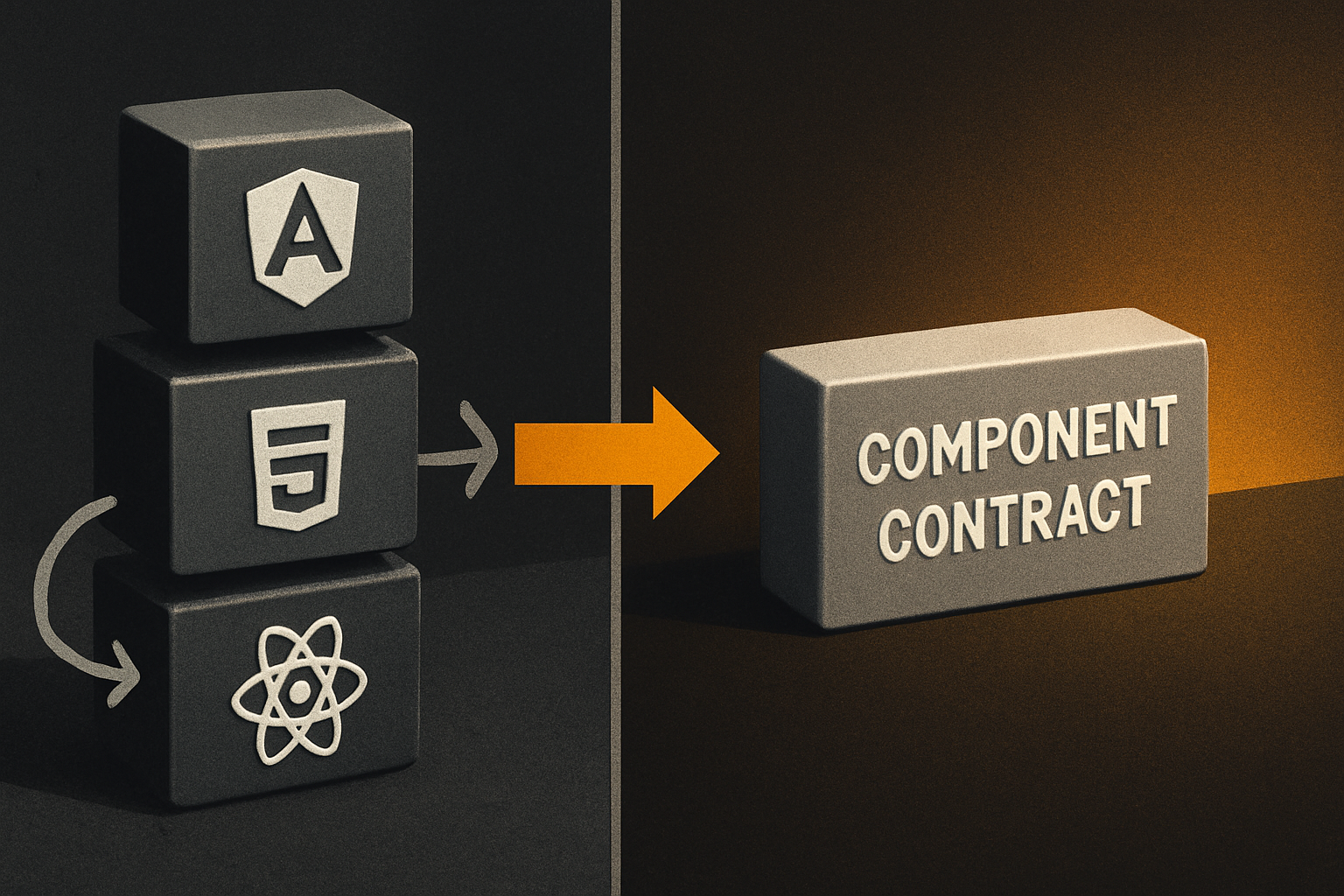
Here's where the durable layer earns its keep — not as an alternative to Claude Sonnet 5 or Copilot, but as the part underneath them.
The models will keep changing. July 16, 2026 was one Tuesday. There will be a July 16, 2027 with a different leaderboard. Every six months the frontier model rotates, and every rotation introduces the same integration tax: re-prompt, re-validate, re-tune.
What doesn't rotate is the rendering surface. The component you ship to the web has to behave the same on iOS and Android. The agent can generate the code, but the architecture that says "this is one component, one API, three render targets" — that's the part that survives every model swap. When Claude Sonnet 6 lands and your prompts need rewriting, the component contract you shipped in July 2026 still works. The agents got better at writing the code; the part that decides what code is correct is the shared shape underneath.
So use the new agents. Wire repo-wide context. Let them chain the tool calls. And treat the cross-platform UI layer — the one place that doesn't need to be re-prompted when the model changes — as the part of the stack you invest in once and stop touching.
Ship the product, not the setup.
- 11 production screens — auth, billing, team, analytics, settings
- Real database, payments, and login — all wired on day 1
- AI configs pre-tuned so your agent extends instead of regenerates