Socket Firewall secures AI development at machine speed

Socket Firewall intercepts package install requests and blocks anything malicious before it can run, and that ordering decision — evaluate before download, not scan after commit — is what makes install-time defense a fit for AI-paced development. AI coding assistants pull dependencies as a reflex, often without meaningful human review, and every unreviewed install is a chance for a typo-squatted or poisoned package to land. A gateway that sits between the package manager and the registry, checking each request against threat intelligence before it reaches your machine, closes the gap that post-hoc scanners leave open.
Socket Firewall blocks malicious packages before they reach your machine
Socket Firewall is Socket's install-time protection layer: it intercepts package downloads and blocks known malware before installation, with policy-driven enforcement that decides what gets blocked, warned, or allowed based on your organization's security and license rules. It runs across developer machines, CI pipelines, and production builds under the same enforcement model, so the rule you set locally follows the dependency all the way to deploy.
The mechanism is a three-step loop. First, Socket Proxy intercepts package manager installs and evaluates each package before it reaches your machine. Second, each package is checked against Socket's threat intelligence, known malware, suspicious behaviors, and policy violations. Third, packages are allowed, warned, or blocked based on configurable rules before installation. Deployment is flexible: run it as a CLI, integrate it as a proxy, or deploy at the network level to protect the whole organization. Ecosystem coverage spans JavaScript, Python, Rust, and more, with Enterprise support for Maven, Ruby, NuGet, and beyond — the registries AI assistants draw from most are covered first.
Socket's own research operation gives the threat-intelligence side credibility: the Socket blog is an active supply chain security publication tracking live campaigns, from malicious registry packages to compromised codegen tooling. That research feed is what turns the firewall from a static blocklist into a live defense — new malicious packages get flagged as the research team finds them, not on the next quarterly rules update.
If you run AI coding agents against your repos, the companion discipline is gating what agents can commit — our AI app security checklist covers the pre-receive hooks and push protection that catch what install-time defenses miss.
Why AI coding assistants widen the supply chain attack surface
AI code generators tear down the friction that once protected us. They pull dependencies as a reflex — recommended by autocomplete, accepted by developers trying to stay in flow. But they lack security context and cannot distinguish a typo-squatted module from the canonical one, or a poisoned helper from a trusted utility. Project-aware agent configs help agents follow your conventions (see Cursor rules for Next.js), but conventions do not stop a malicious install.
Attackers have responded to this exact behavior. They seed open-source registries with typo-squatting, abandoned, or outright hostile modules. Consider an illustrative scenario: a developer asks an AI assistant to add a payment gateway. The model, drawing on public training data, suggests a package with a plausible-sounding name. The developer hits accept, and the dependency is fetched instantly — but the package executes an obfuscated install script that quietly exfiltrates environment secrets. Nothing in the AI's training data flagged the swap, and the developer never inspected the tarball.
Traditional software composition analysis sees this too late. It scans after a commit, often after install scripts and postinstall hooks have already fired. At AI speed, this delay is not just a window — it is the front door. By the time a scheduled scan reports the breach, the attacker's foothold is old news. Anything that lags behind machine-paced development is dead on arrival, which is why the interception point has to move earlier in the pipeline: before download, before storage, before compilation, before runtime.
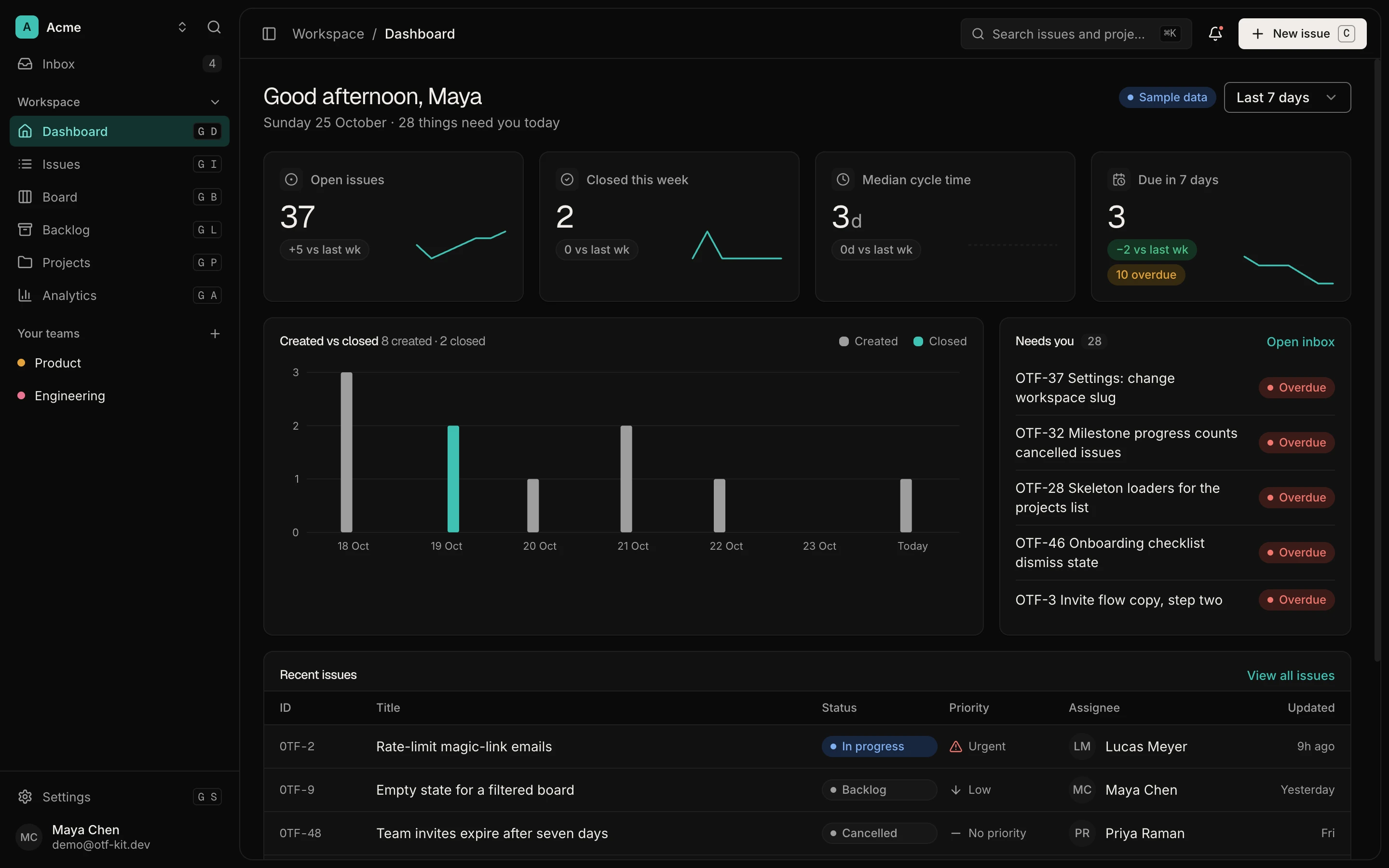
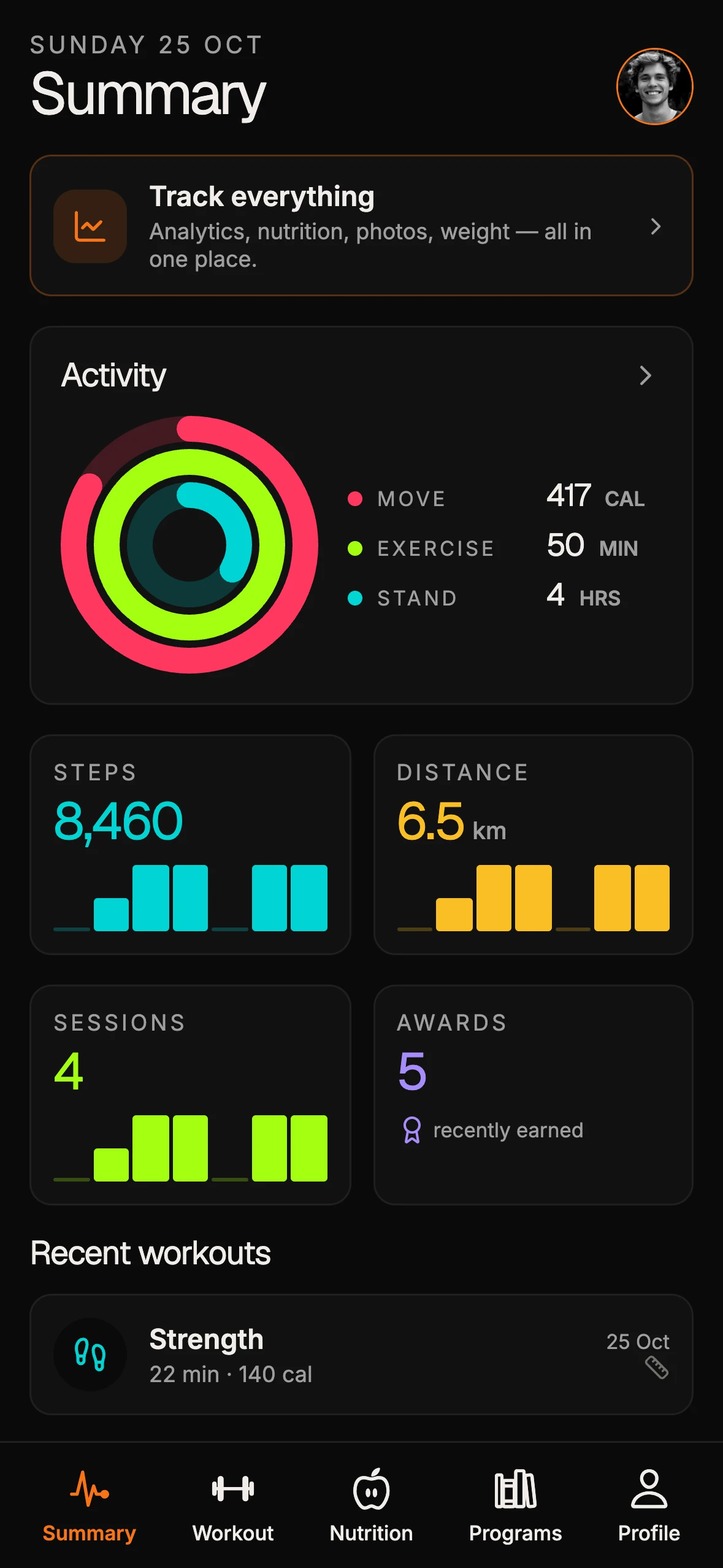
11 production screens. Login and database wired.
The SaaS Dashboard Kit includes login, a database, and a working dashboard. Live demo at saas.otf-kit.dev.
How the intercept-evaluate-enforce loop works in practice
The firewall pattern — intercept before install, block before compile — works because it sits directly in the network path between the package manager and public registries. Here is how each install flows through it:
- Intercept: every request to fetch a new package hits Socket Firewall first, not the registry. The package manager's outbound request is proxied through the evaluation layer.
- Evaluate: the firewall inspects package behavior — does it execute install scripts, touch environment variables, or carry obfuscated hooks? — and structural traits such as naming, duplication, and suspicious patterns, checked against live threat intelligence and policy rules.
- Enforce: if a dependency matches threat signatures — a typo-squatted name, an unexpected postinstall step, an attempt to read secrets — the request is terminated. The package never arrives. Clean packages pass through untouched, so uninfected workflows keep full velocity.
The block happens before download, storage, compilation, or runtime, and surfaces as a real-time decision rather than an ambiguous post-hoc security report. For AI coding in particular, this matches threat detection velocity to code generation speed: instead of racing to remediate after bad code executes, supply chain threats get stopped at the source, as fast as the AI can recommend them.
Teams shipping AI-assisted code to production should pair install-time blocking with a deployment checklist — ship your AI MVP to production covers the gates between a working demo and a safe deploy.
How to put install-time package defense to work today
This is a shipping product, not a paper launch. The fastest path is the CLI: install it globally and route package installs through the firewall evaluation. From there, teams graduate to proxy or network-level deployment so every developer machine and CI runner enforces the same policy without per-seat ceremony.
A practical rollout looks like this:
- Start with warn mode on one repo. Let the firewall evaluate installs and surface warnings before you enforce blocks, so you learn which of your current dependencies trip behavioral flags.
- Keep agent-driven installs inside the protected path. AI assistants that shell out to a bare package manager outside the proxy bypass the synchronous check — route all installs, human or agent, through the same gateway.
- Review every block. A blocked package is often a typo-squat one character from a legitimate dependency. Treat the alert as a signal to choose carefully, not just to retry with a different name.
- Prefer dependencies with transparent provenance. The firewall catches known-malicious code, but AI suggestions still deserve a glance: visible change history, real maintainers, and community trust remain the cheapest filters.
- Extend the same policy to CI. Compromised dependencies blocked on laptops but installable in pipelines are a gap, not a defense — the firewall's CI protection exists precisely so the enforcement model is identical everywhere.
This is not an all-or-nothing upgrade. You keep total workflow velocity and add substantive supply chain defense exactly where it matters: on every install, before a single install hook runs.
What inline defense means for the future of DevSecOps
The direction is clear: a shift from reactive, checklist security to continuous, embedded, automatic defense that matches AI's build speed. DevSecOps teams cannot rely on repository scans that find threats after first execution, especially as AI agents begin to pull, run, and commit code at machine velocity. Real time now means inline and pre-execution — policy baked into the fabric of the install path itself.
Expect this to ripple outward. Teams will demand firewalls and behavioral checks embedded at every AI-powered developer touchpoint, not just at CI or registry mirrors. The install request is the choke point every dependency must pass through; defending it is table stakes for any AI-first toolchain. Wait-and-see is a losing playbook — intercept before install, block before compile, and make the fast path the safe path by construction.
Sources
- Socket Firewall — install-time package protection — intercept, evaluate, and enforce model; CLI, proxy, and network deployment; ecosystem coverage.
- Socket blog — supply chain security research — active research publication tracking live malicious-package campaigns.
- What is Socket? — Socket's protection surface overview.
- AI app security checklist — internal: gating what agents can commit.
- Cursor rules for Next.js — internal: project-aware agent configs.
- Ship your AI MVP to production — internal: production deploy gates.
Building AI-assisted apps on a stack your agent can actually ship? Browse the OTF kits →
Ship the product, not the setup.
- 11 production screens — auth, team, analytics, and settings
- Login and a real database are wired in
- AI configs pre-tuned so your agent extends instead of regenerates
Ship your first screen tonight — free starter in your inbox
The quickstart, the SDK repo and the live kit demos, on this screen and in your inbox.
No spam. Unsubscribe any time.