
Lovable Aims to Double Valuation to $13.2 Billion in New Funding Round

Vibe coding just got expensive. Lovable, the Swedish startup that turns plain-English prompts into shipped apps, is in talks to raise $300 million at a $13.2 billion valuation — exactly double the $6.6 billion it commanded last December. For a company less than three years old that hit a $500 million annualized revenue run rate in June, that's not hype. That's traction, priced accordingly.
The number tells you where the market thinks software is going. Vibe coding — the act of describing what you want and watching the AI build it — is, per the reporting that surfaced the round, "by far the most popular and lucrative use case for AI." Founders, designers, and salespeople who would never touch a package.json are shipping e-commerce storefronts and internal tools. Enterprises like Workday, Asana, and Nvidia are paying for the same workflow at company scale. This post is about what that valuation actually validates — and what it doesn't.
Vibe coding is the most lucrative AI use case right now, and it's not close
The headline number everyone quotes is the valuation. The number that actually matters for builders is the $500M ARR. Reached in June, by a startup that didn't exist three years ago. That isn't a story about investor exuberance — ARR is the one metric you can't fake for long.
What vibe coding enables is genuinely new. The pitch is simple: describe the website, app, or tool you want, and the system writes the code, runs it, and gives you a live URL. No IDE, no framework choice, no setup. You iterate in plain English. For non-developers — the founder who needs an MVP by Friday, the salesperson who wants a custom landing page, the designer who needs a working prototype by EOD — it's the first time "I can just describe it" has been true.
Lovable isn't alone in this lane. Replit was valued at $9 billion in March. Factory raised $150 million at a $1.5 billion valuation in April, focused on AI agents for enterprise development. Cursor — vibe coding aimed squarely at developers — was acquired by SpaceX for $60 billion last month. The category is crowded, well-funded, and growing.
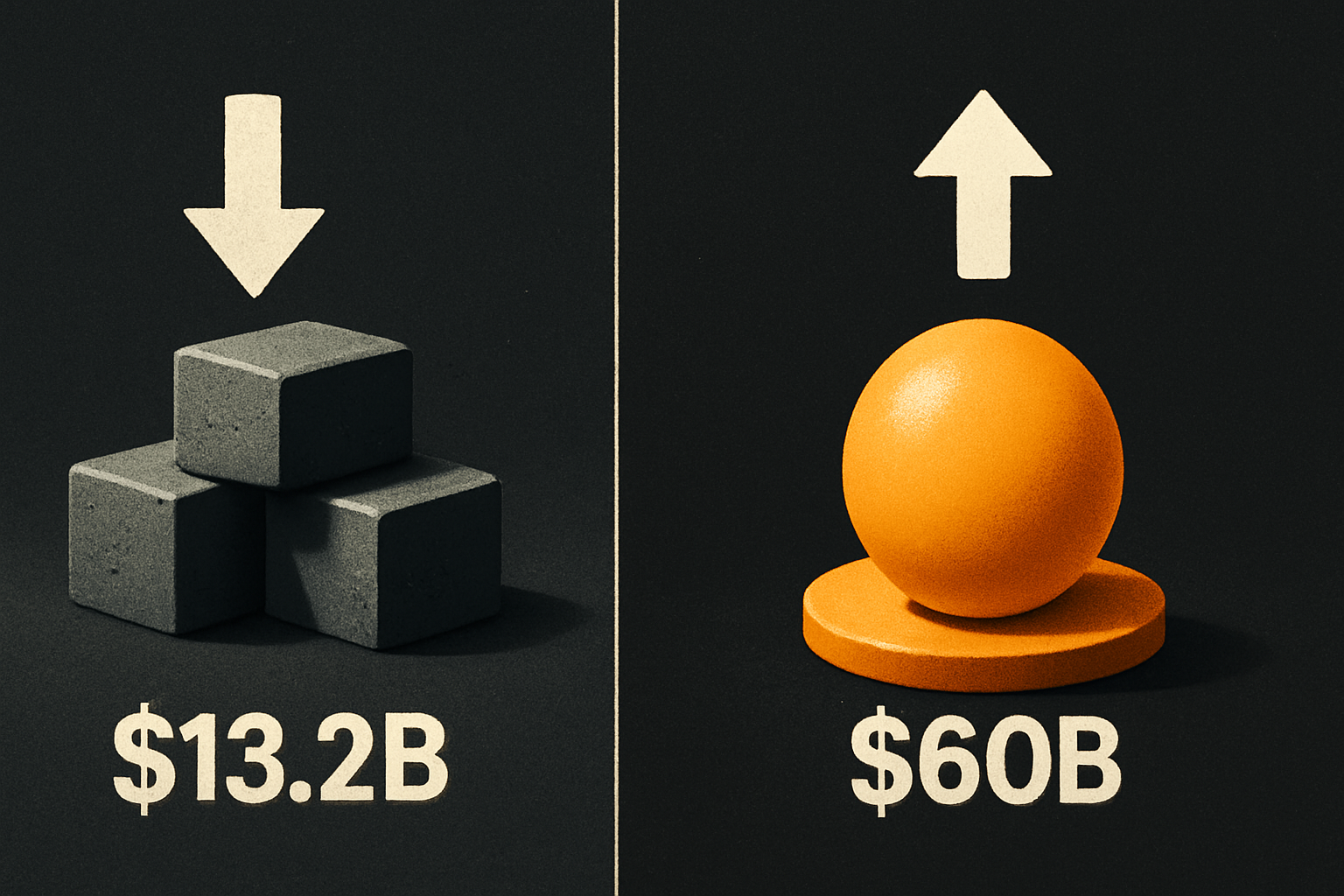
The numbers tell you what the market believes: software is being rebuilt around the prompt, and the companies closest to that loop are being priced as the next platform shift.
How Lovable actually makes money
Two customer shapes, both working. The first is the long tail of non-developers — individual founders, designers, salespeople — building websites and e-commerce storefronts. These users will never open a repo. They pay because the tool replaces an agency, a contractor, or a week of their own time. The unit economics work because the alternative is "I just won't build this."
The second shape is enterprise. Workday, Asana, and Nvidia are all customers. The use case there is different: internal tools, dashboards, prototypes, the long tail of "small software" that IT backlogs for quarters. When the cost of building drops to a prompt and an afternoon, the backlog collapses. That's the wedge.
Menlo Ventures, reportedly leading the $300M round, just announced a $3 billion fund last month. The check size and the fund size line up — this is a lead position, not a follow-on. The $300M goes to R&D and go-to-market. For a company already at $500M ARR, this is fuel, not a lifeline.
Same component. Web and mobile. One codebase.
The free, open-source SDK gives you components that work the same on web and mobile — one codebase. github.com/otf-kit/sdk
How to actually try Lovable today
The fastest path is the public app:
# Open Lovable in a browser — no install required
open

# Or scaffold from a prompt via the CLI
npx create-lovable-app "a pricing page with a monthly/annual toggle"
The workflow once you're in:
- Describe what you want in one paragraph. "A landing page for a SaaS analytics tool, dark mode, hero with a screenshot, three feature cards, footer with a signup form."
- Read the generated preview. Lovable renders the app live in the browser as it builds.
- Iterate in plain English. "Make the hero headline bigger. Move the signup form above the fold. Add a testimonial section after the features."
- Connect a GitHub repo when you want to own the code. Lovable syncs to your repo so you can keep building with a developer, or hand off to engineering.
For enterprise teams, the on-ramp is a workspace plan with SSO, shared projects, and the collaboration features that make it usable past two people. The free tier is enough to validate the workflow. The paid tier is what you need once a non-developer ships something real and someone else has to maintain it.
Where vibe coding runs out of road
Here's the part the $13.2B doesn't price in. The output of vibe coding is, structurally, a starting point. The first 80% — the layout, the styling, the happy-path logic — is what the model is good at. The last 20% — the auth flow that matches your SSO, the data model that mirrors your production schema, the component that has to look and behave identically on web, iOS, and Android — is where the model degrades and hand-coding takes over.
Most vibe-coded apps die at this seam. The prototype ships. The hand-off to engineering starts. The engineer opens the generated repo and finds a thousand micro-decisions the model made that don't compose with the existing system — class names that don't follow conventions, components that won't share a design token with the rest of the product, a backend that talks to your data in a way your security team will never approve. The demo looks great. The integration cost is the real price.
This is the gap that doesn't go away when the model gets better. Better models make the first 80% faster. They don't fix the fact that production software has to compose with the software you already shipped.
The durable layer underneath the tool churn
Vibe coding is the loop. The components underneath — the shared UI layer that has to look and behave the same on web, iOS, and Android from one API — are the part that doesn't change when the model does.
This is where a component kit like the OTF stack earns its keep. Not as a replacement for vibe coding — use Lovable, use Replit, use Cursor, use whatever model is leading next quarter. Use the tool that ships the prototype fastest. But underneath that loop, the component layer has to be the same on every platform the product runs on. One API, one design system, web and mobile in lockstep. When the AI generates a button, it should be the same button your team has shipped a hundred times — not a one-off the model invented because it didn't know your conventions.
That's the part the $13.2B doesn't replace. Better models make the prompt loop better. They don't make the components converge.
What $13.2B actually enables
Lovable's round — and Replit's, and Cursor's, and Factory's — is the market telling builders two things at once. First: vibe coding works. The ARR proves it. The enterprise customers prove it. The competitors raising at comparable valuations prove it. Second: the tool layer is going to churn. Lovable is the leader today; the leader next year may not exist yet. Models improve, prices drop, the workflow changes.
What survives the churn is the layer underneath — the components, the conventions, the design system, the cross-platform parity. That's the part a startup owns and a model doesn't. Build the prototype with whatever tool is fastest this quarter. Build the production layer with the components that have to outlive the tool.
Vibe coding is the loop. The component layer is the product. The $13.2B is pricing the loop. Your job is to make sure the loop ships into a product that holds together.
Buy once, own the code. Ship with the agent you already use.
- Free, open-source SDK — same component, web and mobile
- Paid kits include AI configs + 40+ tested prompts — your agent reads the whole project
- $99/kit or $149 for everything. No subscription, no sandbox limit.