
Introducing Vise: Trustworthy AI-Powered SDK Integration Workflows

Vise turns AI SDK guesswork into a contract a reviewer can trust
A coding agent can scaffold a social feed in five minutes. It can also write code that compiles cleanly and crashes the moment it touches a real session. The hard part isn't speed — it's proof. social.plus just shipped Vise, a local CLI and installable agent skill that gives Claude Code, Cursor, Copilot, Codex, and VS Code a checked path from feature request to shippable SDK integration, with 400+ platform-specific checks across iOS, Android, Web, Flutter, and React Native.
That's the headline worth pausing on. Vise isn't another "AI tool" in the marketing sense. It's a proof layer. It doesn't write code faster; it makes the code that an agent already wrote inspectable, versioned, and verifiable. As Trust Ratch, VP of Technology at social.plus, put it directly: "Vise is the proof layer for AI-assisted SDK integration, turning a build that compiles into a record a reviewer can actually trust."
That distinction matters more than the launch announcement lets on. The default agent loop today is: generate, error, retry, generate, error, retry. Each retry burns tokens and developer attention. Vise inserts at the verification step and short-circuits the loop with concrete checks — the SDK-specific things a model genuinely cannot infer from a README.
The gap coding agents actually have with SDKs
The failure mode the announcement names is specific and worth sitting with: "Coding agents can already write code fast. What they don't know is social.plus's SDK, so an ungrounded agent guesses, hits an error, and guesses again."
Three patterns show up in every broken agent loop I see:
- Semantic guessing on ambiguous requests. A line like "add social features" has more than one valid shape — a feed-first community, a live-class chat hub, an events-and-challenges hangout. The agent commits to one before a human has weighed in. The surfaces exist before anyone catches the choice was wrong.
- Compile-pass, runtime-fail. The build succeeds. The screen crashes on the phone. Or a hardcoded object ID makes the demo look connected when the integration is empty. The agent reports "done." The reviewer discovers otherwise at QA — or in production.
- Transcript as evidence. When a reviewer asks "how do we know it worked," the only artifact is the agent's prompt transcript. Tech leads either trust the run blindly or re-check every surface by hand. Neither scales past one engineer.
Vise targets all three by replacing the transcript with a versioned, checked contract. The contract is what gets reviewed, not the chat log. That's a different artifact type than what most agent workflows produce today.
11 production screens. Login, database, payments — all wired.
The SaaS Dashboard Kit ships everything already connected. Nothing to set up. Live demo at saas.otf-kit.dev.
What Vise actually runs
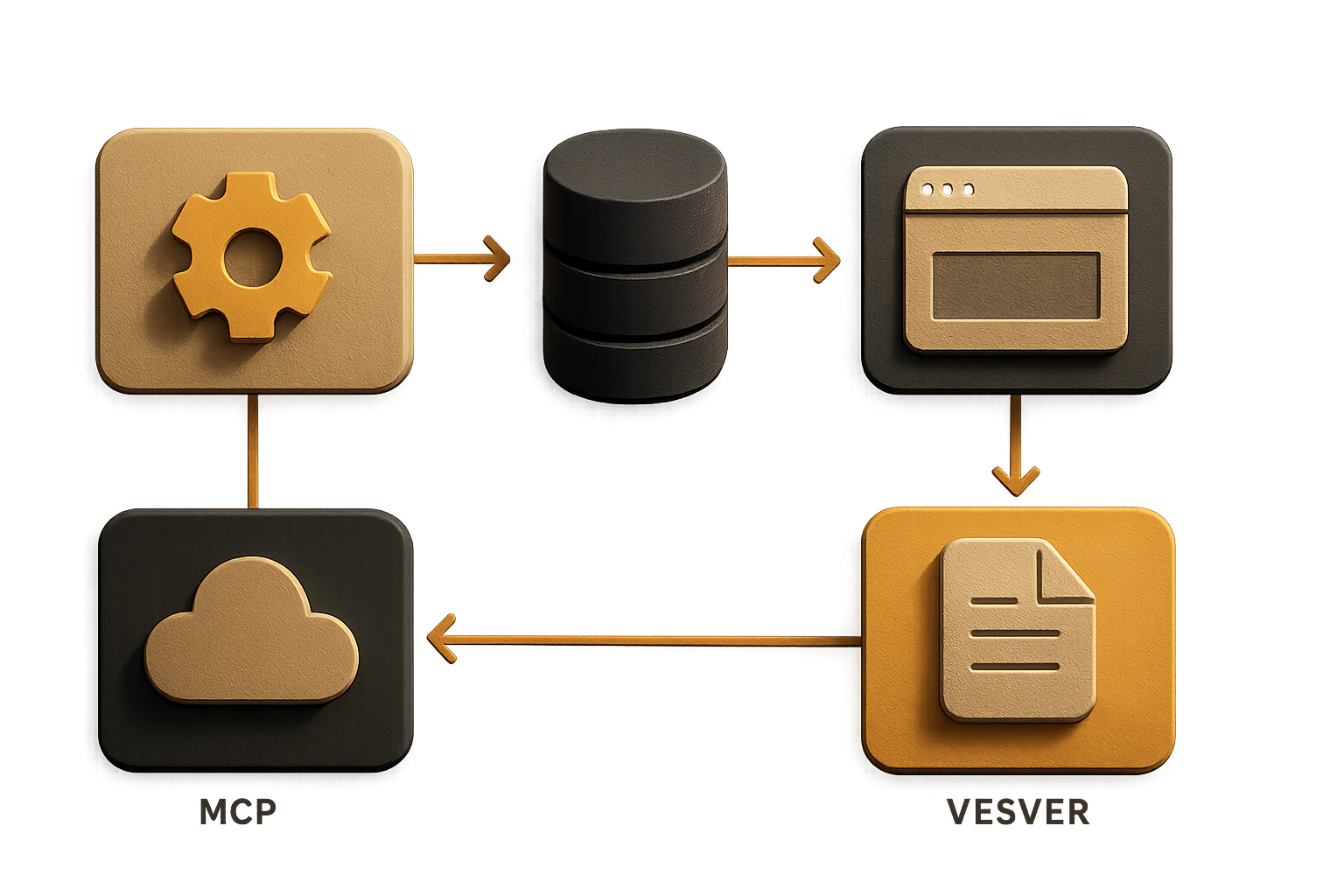
Vise is a local CLI plus an installable skill you drop into your coding agent. It pairs with social.plus's Model Context Protocol server — which already makes the platform AI-ready by default — and extends that into "AI-ready for build." Discovery and grounding come from the MCP server; the build-time contract comes from Vise.
# install the Vise CLI
npm install -g @social-plus/vise

# point your agent at the local skill
vise install --agent claude-code
vise install --agent cursor
vise install --agent copilot
vise install --agent codex
vise install --agent vscode
Once installed, the agent gets a repeatable workflow: generate → Vise runs 400+ platform-specific checks → report → fix → re-run → shippable integration. The checks span iOS, Android, Web, Flutter, and React Native — which is the unglamorous detail that matters most, because "cross-platform" is exactly where agents fall over.
A representative check call from inside an agent:
// what your agent calls after writing integration code
const result = await vise.check({
  platform: 'ios',
  scope: 'feed',
  integration: './src/social',
})

if (!result.passed) {
  // each finding carries a fix hint, not just a stack trace
  for (const finding of result.findings) {
    console.log(`${finding.check}: ${finding.fix}`)
  }
  process.exit(1)
}
The output is a versioned artifact, not a transcript. Reviewers can diff it, comment on it, and approve it. That's the change in shape that makes the workflow sustainable past one engineer.
How to wire Vise into an existing agent loop
The minimum viable setup is four steps:
- Install the CLI.
npm install -g @social-plus/viseis the starting line. Once Vise is in a brew tap, that path opens up too. - Connect to the MCP server. social.plus already ships one. Authenticate once and the agent has grounded context on the SDK surface — the part the model would otherwise have to guess about.
- Install the skill into your agent. Vise ships skills for Claude Code, Cursor, Copilot, Codex, and VS Code. One install command per agent.
- Hook the check into CI. A failing Vise run blocks merge, the same way a failing test does:
# .github/workflows/vise.yml
name: Vise SDK checks
on: [pull_request]
jobs:
  vise:
    runs-on: ubuntu-latest
    steps:
      - uses: actions/checkout@v4
      - run: npm install -g @social-plus/vise
      - run: vise check --all-platforms
The CLI exits non-zero on a failed check, so the same gating semantics you use for unit tests apply. No special reviewer workflow needed.
A few practical notes from the announcement worth flagging:
- Vise is opinionated about what to check (the SDK-specific contract, not generic lint), so it slots in next to ESLint and SwiftLint rather than replacing them. Don't try to make it your linter.
- The MCP server is what makes the platform AI-ready by default; Vise is the build counterpart. You can use the MCP server alone for ad-hoc agent exploration; Vise is for the part that ships.
- The skill install is per-agent, so roll Vise out to one agent first — Claude Code is a fine starter if the team already lives in it — and expand from there once the CI gate works.
Where OTF sits alongside Vise
Vise solves one specific, hard problem: it makes an SDK integration provable. It doesn't solve the next layer up — the components an agent reaches for when scaffolding a feed, a chat surface, or a community hub.
That's the durable layer Vise doesn't touch. When an agent writes a feed card, a comment thread, or a user avatar, those primitives need to render identically on web, iOS, and Android — same props, same behaviors, same accessibility tree. The agent can't reason about that from a README; it needs a single API that produces the same component on every platform without a per-platform rewrite. The model might know how to call a <Feed />, but the moment it has to pick between a web version and a native version, it guesses — and we're back in transcript-as-evidence territory.
OTF sits underneath the tool churn at exactly that level. Vise, Claude Code, Cursor, the next agent that ships next quarter — they all change. The component contract doesn't. A feed card that behaves the same on web and native, with the same props and the same keyboard and a11y semantics, is the part that survives the model swap.
Use Vise for what it's built for: a checked contract on the SDK integration itself. Use a shared component layer for what it's built for: identical UI across platforms without a per-platform fork. They don't compete; they stack.
What this enables
A few real changes once Vise is in the loop:
- Reviewers stop reading transcripts. They read a versioned contract with passing checks and a diff. That's a different meeting, and a shorter one.
- Agents stop retrying blindly. A concrete failure with a fix hint is cheaper than a stack trace and another guess.
- Tech leads stop hand-checking every surface. Trust moves from "I watched the agent run" to "Vise passed on commit."
- Cross-platform coverage stops being a manual spreadsheet. 400+ checks across five platforms, run on every PR, is what replaces the spreadsheet. The list stops rotting.
The last one is the most interesting. Cross-platform consistency has been a spreadsheet problem forever — someone keeps a list of which surfaces are verified on which OS, and the list rots the moment someone merges a Friday-afternoon fix. A checked contract run on every PR is what replaces it. Vise does it for SDK integration; the same shape, applied to UI primitives, is what closes the gap on the component side.
That's the stack worth building toward: agent skills that produce checkable contracts, component layers that produce identical surfaces, and CI that gates on both. Vise is a real step on the first leg. The component layer is the durable base the rest of the stack rests on.
Ship the product, not the setup.
- 11 production screens — auth, billing, team, analytics, settings
- Real database, payments, and login — all wired on day 1
- AI configs pre-tuned so your agent extends instead of regenerates