
Codex Transforms Coding with smooth ChatGPT Integration
Code lives in your editor. Your UI ships to three platforms.
OpenAI just folded Codex into ChatGPT. The number worth sitting with is six million — weekly active developers on Codex before the integration even shipped, per Romain Huet's announcement this week. Add 150 updates in the past two months and you have a tool that is already running inside most AI-coding workflows. Putting it inside the ChatGPT app consolidates three things developers were juggling separately: the conversational surface, the coding agent, and a new work agent for project-sized tasks. That is a real workflow win, not a marketing repaint.
For teams shipping production apps, the integration removes the context-switch tax. You ask Codex for a refactor in the same panel where you asked it why the auth middleware throws. The new GPT-5.6 Sol model is now available to all users — a frontier model designed to stay coherent across long, complex tasks. Pair it with Ultra mode and the new Goal command and you get a larger reasoning budget for ambitious projects, with the explicit trade-off that token budgets burn faster. That is the honest shape of the release: more capability, more consolidation, real cost to be aware of.
Then we get to the part the model churn doesn't touch.
What Codex-in-ChatGPT actually changes
Three surfaces collapse into one:
- Conversational AI (the ChatGPT you already use)
- The Codex coding agent
- A new work agent for multi-step, project-sized tasks
You stop alt-tabbing. You stop copy-pasting stack traces from your terminal into a separate window. You stop maintaining a separate Codex subscription mental model alongside your ChatGPT one. For solo developers and small teams, the practical effect is shorter feedback loops — ask, get code, refine, ship, all in one window with one auth model and one billing surface.
The rollout is gradual. Per OpenAI's announcement, GPT-5.6 Sol is rolling out to all users but the model picker may not show on every account on day one. Treat the first 48 hours like any vendor rollout: check the picker, verify the model id, don't assume the new default is on until you see it.
Same component. Web and mobile. One codebase.
The free, open-source SDK gives you components that work the same on web and mobile — one codebase. github.com/otf-kit/sdk
GPT-5.6 Sol, Ultra mode, and the Goal command
These three are the new verbs worth internalizing.
GPT-5.6 Sol is the engine. OpenAI describes it as a frontier model for complex problems over extended periods — the kind of work where you hand the agent a multi-file refactor and walk away for ten minutes. No published accuracy benchmarks yet; that's the gap worth watching. Vendor speed and capability claims stay vendor-claims until a third party runs the numbers.
Ultra mode is the lever. It gives the model a larger reasoning budget per turn. Same model, more thinking time per response. The cost is exactly what OpenAI named: faster token consumption. If you are on a metered plan, treat Ultra mode like CI — invoke it for the hard tasks, drop back to Standard for routine ones.
The Goal command is the new verb for project-sized work. It reframes Codex from "answer this question" to "execute this multi-step plan." That is the shape Ultra mode is tuned for: a defined goal, hard constraints, an explicit acceptance check. A bug-fix prompt and a Goal prompt look very different.
Goal: Refactor the billing module to use the new pricing API.

Constraints:
- Keep existing tests green.
- Do not change the public method signatures.
- Update the migration script.

Acceptance:
- `pnpm test` passes.
- New endpoint is wired in the routing table.
The diff Codex returns will be larger than a one-shot fix. That is the point. You are buying reasoning depth with tokens.
How to actually use this today
The how-to is short because the surface is consolidated. You do not need a separate Codex CLI install if you are using the ChatGPT app, but you do need to know the new verbs.
1. Open Codex inside ChatGPT.
The Codex entry point now lives inside the ChatGPT app. If you already have a paid ChatGPT plan that includes Codex, the agent appears in the same sidebar as your conversations. No new login, no new auth flow.
2. Pick the model.
GPT-5.6 Sol is the default for coding tasks now. To switch explicitly:
// Codex work agent → task dialog
{
  model: "gpt-5.6-sol",
  mode:  "ultra" | "standard"
}
If you do not see the model picker, your account has not rolled over yet.
3. Use the Goal command for project-sized work.
Frame the task with three blocks: a Goal, hard Constraints, and an Acceptance check. That prompt shape is what Ultra mode is tuned for. The agent reasons longer, returns larger diffs, and burns more tokens — exactly the trade-off OpenAI called out.
4. Watch the token meter.
Ultra mode consumes tokens faster. If you are on a metered plan, invoke it for the hard tasks, drop back to Standard for the routine ones. The model id is the same in both modes — only the reasoning budget changes.
5. Pipe Codex output into your real workflow.
For anything beyond a one-off script, the diff Codex returns still needs to land in a branch. That means a Git client, a PR template, a CI run. The ChatGPT surface is the conversational front door; your repo is still the source of truth. Codex is the accelerator. Git is the ledger.
The part that doesn't churn
Here is the layer worth investing in while you chase the latest Codex release.
Codex — and the next Codex, and the one after that — generates code. The model that generates it will keep churning. GPT-5.6 Sol ships today, a faster or cheaper or longer-context variant ships next quarter, and the workflow question stays the same: where does the generated code live, and how does it look and behave across the surfaces your users actually touch?
For most teams, that means web, iOS, and Android — three platforms that do not share a UI runtime. The generated code is only as good as the UI primitives it leans on. If the agent produces a <Card> for the web client and a hand-rolled Card view for iOS and a third one for Android, you have three components to maintain, three sets of design drift to police, three bugs to fix when the spec changes. The model wrote the code fast; the team now owns the inconsistency.
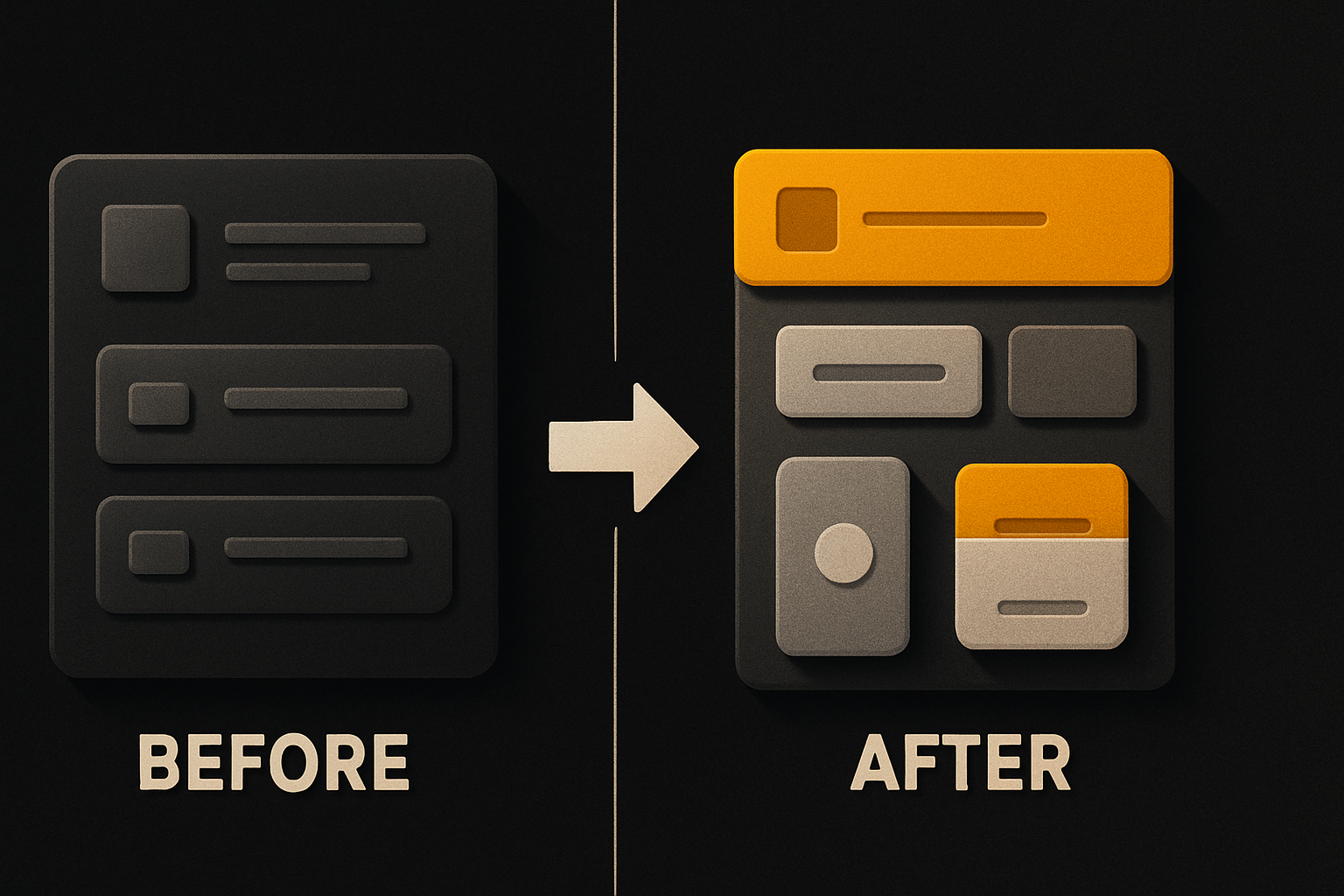
The outcome that holds across model churn is the same component looks and behaves the same on web, iOS, and Android — one API. When the AI agent generates UI, it generates against a shared primitive set. When a designer tweaks the card spec, the tweak lands once. When the next Codex ships, the agent still writes against the same component contract; you do not redo the UI layer to chase the model.
That is the part worth investing in while you chase the latest Codex release. The model is the accelerator. The shared component layer is the road.
What this enables
Concretely, with a consolidated Codex-in-ChatGPT surface and a UI layer that ships the same component everywhere:
- Faster refactors across platforms. Goal-prompt a Codex refactor of
Card, get one diff that lands on web, iOS, and Android because all three consume the same primitive. - Cleaner design ops. Designers tweak the spec in one place. The component updates propagate. The AI agent picks up the change next time it generates against the component.
- Less drift, fewer regressions. Three implementations of
Cardbecomes one. The class of bugs that came from "the iOS version doesn't match the web version" goes away. - Model-agnostic velocity. When the next Codex ships — or when you swap in Claude Code, or Cursor, or a local model — your UI layer does not change. The contract your agents write against is the durable artifact.
Where this leaves you
Codex-in-ChatGPT is a real consolidation win: one surface, one auth model, one billing surface, six million weekly users already on the underlying tool. GPT-5.6 Sol plus Ultra mode plus the Goal command is a meaningful capability jump for project-sized work — with a real token-cost trade-off that OpenAI named explicitly in the announcement.
Use it. Wire Codex into your editor flow today, frame the hard tasks as Goals with constraints and acceptance checks, drop back to Standard mode for the routine ones. The integration earns its keep on context-switch alone.
Then spend the time you saved on the layer that does not churn: a UI codebase that ships the same component to web, iOS, and Android without three parallel implementations. The model will be different next quarter. The surfaces your users touch will not.
Buy once, own the code. Ship with the agent you already use.
- Free, open-source SDK — same component, web and mobile
- Paid kits include AI configs + 40+ tested prompts — your agent reads the whole project
- $99/kit or $149 for everything. No subscription, no sandbox limit.