
Why Pre-Wired MCP Hookups Are Essential for Coding Agents

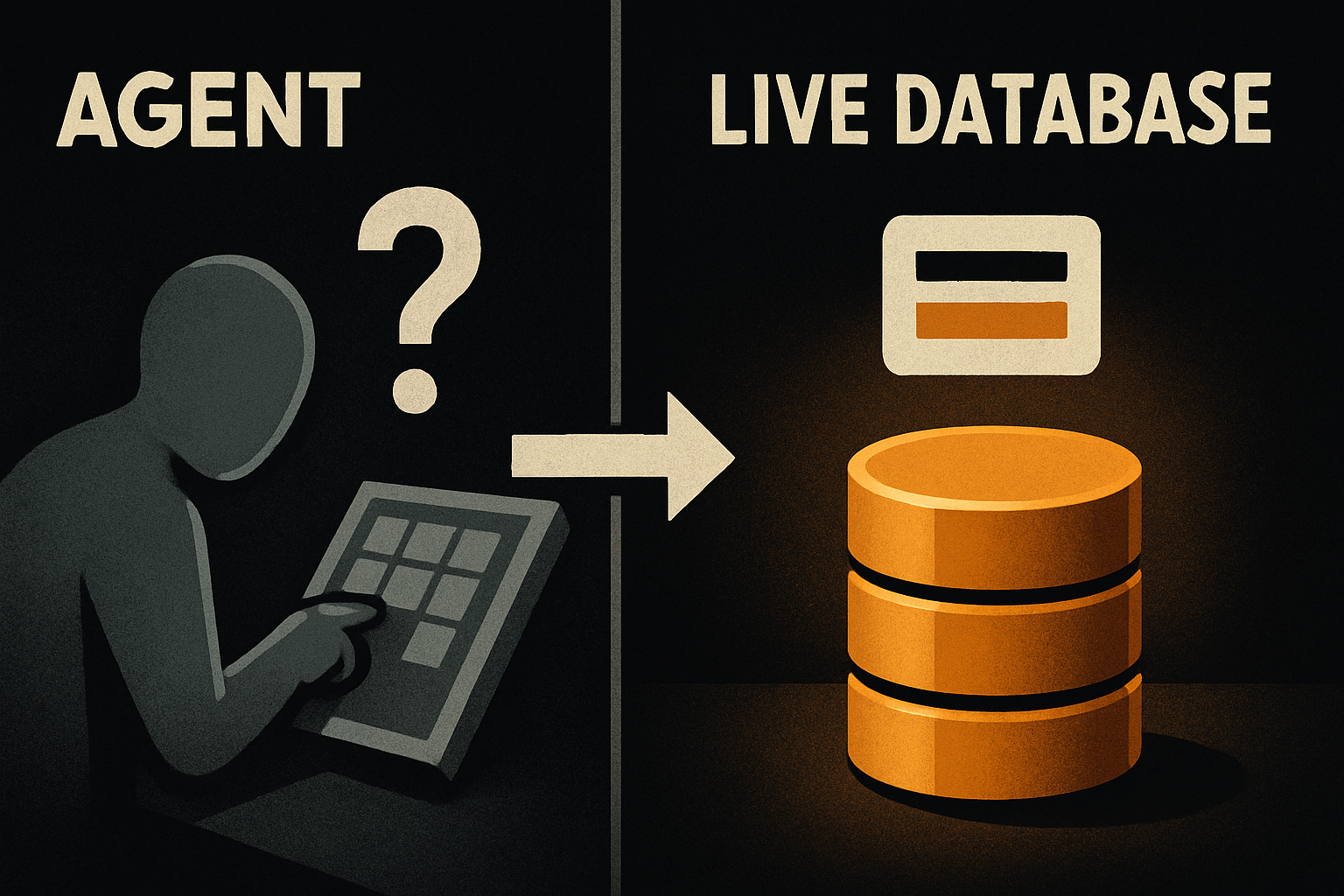
The fastest model in the world cannot tell you how many rows are in your users table. It can guess. It can pattern-match against schema.prisma if you've pasted it in. It can hallucinate a number that sounds plausible. But it cannot ask your database. That's a wiring problem, and no amount of context-window growth fixes it.
A coding agent that's useful in a real codebase is one that can act — run a migration, query the database, hit your deploy script, read the actual response from the latest preview deploy, then write code that doesn't lie about what it just saw. That requires the agent to have tools. Not better tools, not smarter tools — exposed tools. The thing that ships with the wiring already attached is what turns a model into a teammate instead of a guesser.
This post is about why kits that ship MCP-style hookups pre-wired change what an agent can do on day one, and why the missing piece is almost never the model.
The model is not the bottleneck
A frontier model can read a 200k-token codebase. It can find the auth handler, identify the middleware order, and propose a fix. It can write the fix. The bottleneck is not "the model doesn't understand my code." It understands your code just fine.
The bottleneck is that, after writing the fix, it has no way to verify the fix actually works against your real database, your real Stripe webhook handler, or your real Redis cache. It writes, you run, you paste the error back. That's the loop. It's slow because the agent is blind between turns.
A model with eyes is just a model with tools.
What "real codebase" actually means
Here's what an agent needs to do to be useful in a non-trivial app:
- Run a query against the dev DB and see the actual schema (not the one in
schema.prisma, the one that exists after the three migrations you forgot to commit). - Hit the
/api/healthendpoint on a preview deploy and confirm it's not 500ing. - Tail the last 50 lines of a server log from the failing test run.
- Apply a migration, then re-run the failing query.
- List the env vars actually present on Vercel, not the ones in
.env.example.
None of that is "AI." It's all just I/O against the running system. Today, the way you give an agent that capability is: you write the wiring. A shell script. A small server. A config file. A new context block in .cursorrules. You do this once per environment. You forget it. It rots. Six months later you have an agent that "knows" your codebase but can't run anything.
11 production screens. Login, database, payments — all wired.
The SaaS Dashboard Kit ships everything already connected. Nothing to set up. Live demo at saas.otf-kit.dev.
MCP is just plumbing — and that's the point
MCP is a wire protocol. A server exposes a list of tools — name, description, JSON-schema for inputs — over stdio or HTTP. A client (the agent) discovers those tools at startup and calls them like any other function. That's it.
The reason it matters is not the protocol. It's the interface. Before MCP, every agent built its own way to expose tools. Cursor had one shape, Claude Code had another, Zed had a third. Each tool author wrote three integrations. Each one rotted at a different rate. MCP collapses that to one integration, written once, consumed everywhere. Cursor reads the same .cursor/mcp.json file as Claude Code, as Continue, as Windsurf, as Zed. The protocol is small enough that a single kit can ship one server and light up every agent the user might pick.
For kit authors this is the actual enable: write the MCP server once, ship it with the kit, every agent the user tries picks it up for free.
What a pre-wired hookup looks like
A SaaS kit that ships with the wiring baked in might expose tools like this:
{
  "mcpServers": {
    "kit-db": {
      "command": "node",
      "args": ["./node_modules/@otfdashkit/mcp-db/dist/index.js"],
      "env": { "DATABASE_URL": "${DATABASE_URL}" }
    },
    "kit-deploy": {
      "command": "node",
      "args": ["./node_modules/@otfdashkit/mcp-deploy/dist/index.js"],
      "env": { "VERCEL_TOKEN": "${VERCEL_TOKEN}" }
    },
    "kit-logs": {
      "command": "node",
      "args": ["./node_modules/@otfdashkit/mcp-logs/dist/index.js"]
    }
  }
}
Drop that in .cursor/mcp.json and the agent now has nine new tools: db.query, db.migrate, db.list_tables, deploy.preview, deploy.logs, deploy.env, logs.tail, logs.search, logs.since. No code on the user's side. No doc to read. The agent discovers them at startup and uses them the same way it uses its built-in read_file.
Here's what an actual call looks like from the agent's side:
// inside the agent loop
const result = await mcp.callTool("kit-db", "db.query", {
  sql: "select count(*) from users where created_at > now() - interval '24 hours'"
});
// → { rows: [{ count: 1847 }] }

const logs = await mcp.callTool("kit-logs", "logs.tail", {
  service: "web",
  lines: 200
});
// → { lines: ["[error] stripe webhook signature mismatch ...", ...] }
The model didn't need to be smarter. The wiring existed. The agent went from "I think there might be a webhook issue" to "here are the last three signature failures and the migration that would have prevented them" in two tool calls.
Why "just write the wiring yourself" is the wrong answer
You can write this. It's a 200-line Node script per tool. It's also a thing you will write once, never update, and not document. Two months from now a new dev joins, doesn't know it exists, pastes a schema dump into the prompt window, and goes back to guessing. The wiring didn't fail — it never had a chance to be maintained. Nobody maintains the infra between an agent and a database. It's the same category of work as writing your own auth: theoretically possible, practically a tax you pay every time the upstream changes.
The reason kits ship with this is the same reason they ship with auth, billing, and a typed DB client: because the per-project cost of writing it from scratch is non-trivial, and the per-project value of getting it right is high. Off-the-shelf is the only rational answer for the wiring layer. The interesting part is that every agent can consume the same wiring because they all speak the same protocol now.
What this gets you on day one
A new kit user opens the project in Cursor. They start typing: "why are signups failing in production?" Without MCP wiring the agent reads your code, sees a webhook handler, hypothesizes. With wiring it does:
- Calls
deploy.logson the preview URL — sees a 500 trace. - Calls
db.queryfor the last 10 webhook events — sees 7 missing signatures. - Reads the handler in
src/billing/webhook.ts— spots the bug. - Patches it, calls
db.migrateto add the missing index, re-runs the query to confirm.
That whole loop ran without the user copying a single log line. The model did the reasoning. The wiring did the I/O. Neither alone is sufficient. The reason this isn't yet table-stakes for every AI editor is that the kit ecosystem hasn't caught up — most kits ship the app code and leave the agent-integration layer as an exercise for the reader.
The part that doesn't change when the model does
Models will keep getting cheaper, faster, longer-context. Every six months the headline shifts. The wiring — your schema, your deploy pipeline, your real environment — doesn't shift with it. The kit that ships pre-wired is the one that turns whichever model is the flavor of the month into something that can actually do work in your codebase, today.
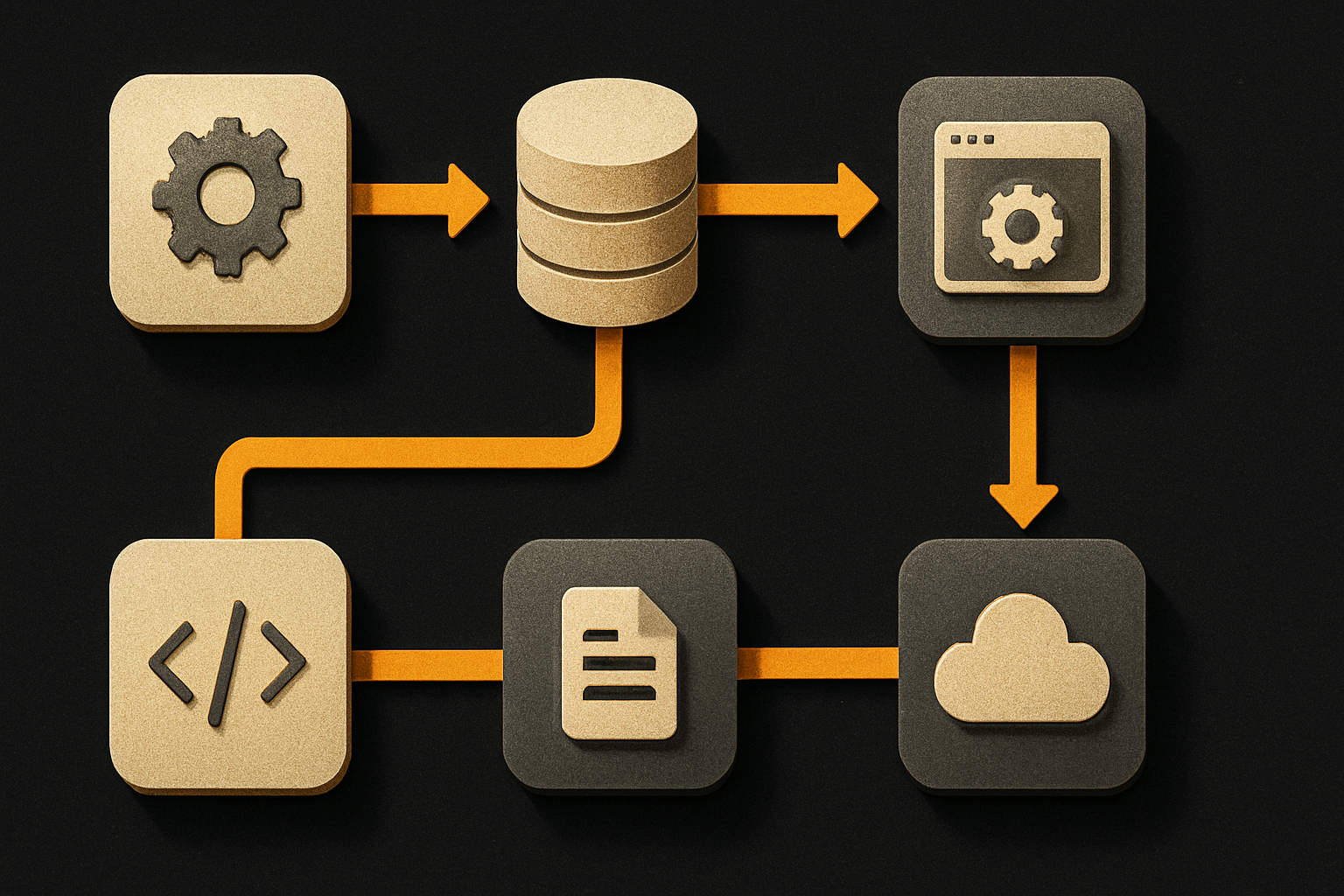
This is the durable layer under model churn: not a better prompt, not a bigger context window, but the I/O paths the model can actually call. Ship the wiring once. Keep the model swappable. The agent becomes useful the moment it boots, not the moment you finish writing your fifth custom integration script.
Ship the product, not the setup.
- 11 production screens — auth, billing, team, analytics, settings
- Real database, payments, and login — all wired on day 1
- AI configs pre-tuned so your agent extends instead of regenerates