
Enterprise Cybersecurity Evolves: Continuous AI Security Testing on the Rise

The annual pentest is dying. Not quietly, and not slowly — it's being outpaced by the daily deploy.
For two decades, the rhythm was the same: a team of consultants spends two weeks assessing an application, hands you a report, and your team spends months fixing the top three findings before the next engagement rolls around. That rhythm made sense when software shipped on quarterly or annual cadences. It makes no sense when the typical enterprise is deploying code to production every day, and many engineering teams deploy multiple times per day.
The gap between "tested" and "running" is no longer a quarter. It's a morning.
This is the gap Bright Security's new industry analysis names, and it's the gap continuous AI-driven security testing is built to close. It's a genuinely good framing — security has been the slowest part of the SDLC for years, and continuous DAST plus AI-assisted triage is the first credible attempt to make it match the deploy cadence instead of lagging it by twelve months.
Annual pentests were designed for a slower era
The old model had a clean logic: applications changed slowly, so expensive point-in-time audits made sense. A penetration test would identify the current state of the app. Engineers would patch the worst findings. Twelve months later, you'd repeat the process.
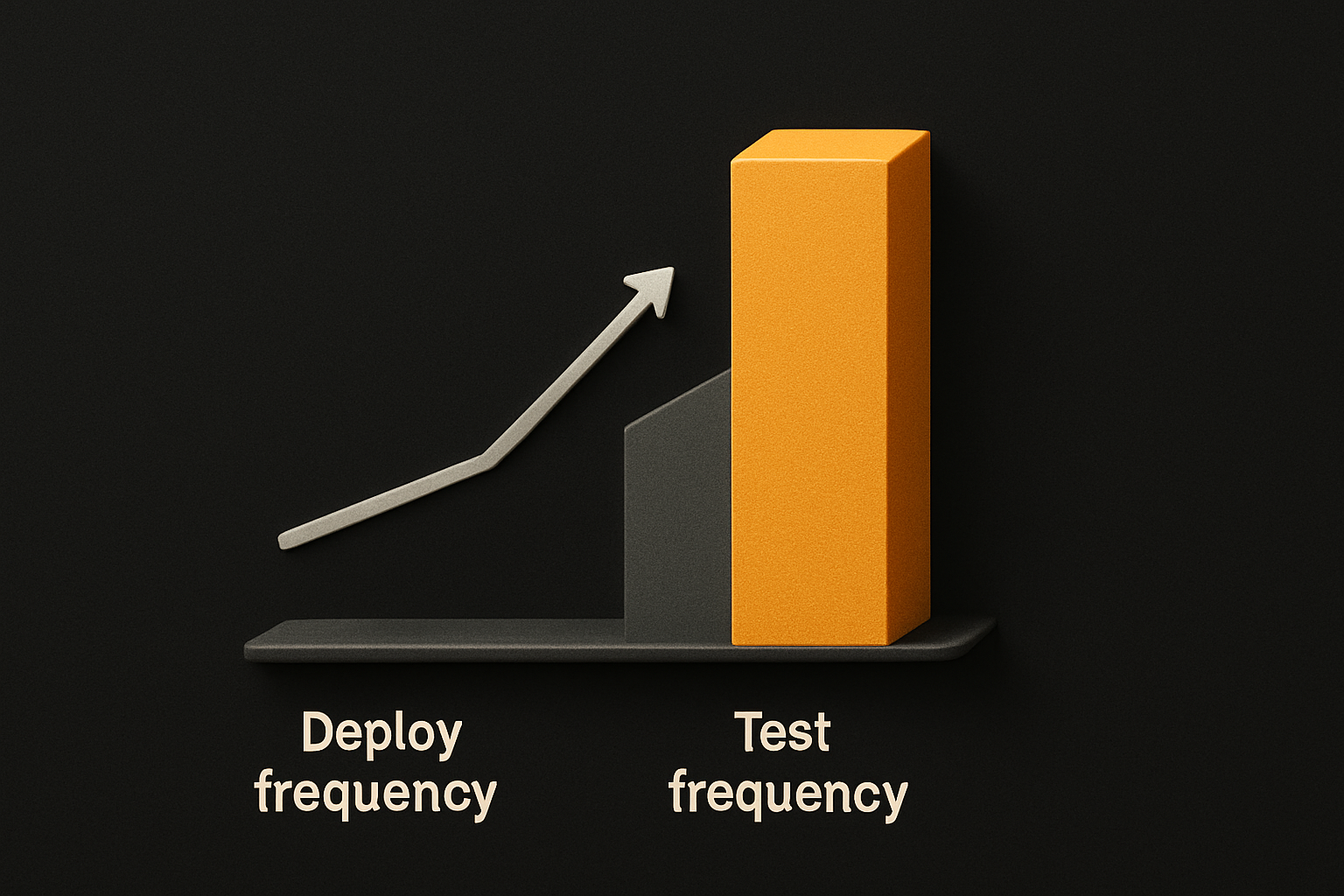
That logic breaks the moment your release frequency exceeds your test frequency. Bright Security's framing of this is sharp: a penetration test in January does not imply that there is an application in March. The asset you tested may not be the asset you're running by the time the report is delivered.
The financial objection is now in the room too. As Bright Security notes, security leaders will no longer accept a six-figure consulting fee for results that are valuable only until before they read the report. When the half-life of your findings is shorter than the time it takes to remediate them, the unit economics of the annual pentest collapse.
This is not an argument against pentests. A skilled human adversary simulation still catches logic flaws, chained vulnerabilities, and business-logic abuse that no automated scanner will ever flag. The argument is that the pentest is no longer the primary security control — it's a calibration event that runs alongside an always-on scanning layer.
What continuous DAST actually does
Continuous Dynamic Application Security Testing is the part of the AppSec stack that watches your running application on every build. Where a static scanner reads the source, a DAST scanner black-boxes the live HTTP surface the way an attacker would: log in, click around, fuzz inputs, look for SQLi, XSS, broken auth, and the long tail of OWASP Top 10 issues.
The "continuous" part means the scan runs in your CI/CD pipeline against the build artifact that just got promoted to staging, not against a snapshot someone scheduled six months ago. When a new endpoint is added or a dependency is upgraded, the next pipeline run catches it. That's the loop Bright Security's analysis is highlighting — and it's the right loop.
A minimal working setup looks like this in a GitHub Actions workflow:
name: build-and-scan
on:
  push:
    branches: [main]
  pull_request:

jobs:
  dast:
    runs-on: ubuntu-latest
    steps:
      - uses: actions/checkout@v4

      - name: Deploy to staging
        run: ./scripts/deploy-staging.sh
        env:
          STAGING_URL: ${{ secrets.STAGING_URL }}

      - name: Run DAST scan
        run: |
          dast-scan \
            --target "$STAGING_URL" \
            --auth-file ./dast/auth.json \
            --policy ./dast/policy.yml \
            --fail-on high
        env:
          DAST_API_KEY: ${{ secrets.DAST_API_KEY }}
The --fail-on high flag is the part that turns the scanner from a report generator into a gate. Build red, fix the finding, build green. That loop is what makes the test "continuous" in the operational sense, not the marketing sense.
11 production screens. Login, database, payments — all wired.
The SaaS Dashboard Kit ships everything already connected. Nothing to set up. Live demo at saas.otf-kit.dev.
Where AI changes the equation
The second half of Bright Security's insight is the harder one to argue with. AI coding assistants — Copilot and the rest — have materially compressed the time from "ticket written" to "code in production". Teams are deploying features faster than manual review can keep up. That velocity is genuinely good for product velocity and genuinely bad for the queue of code waiting to be security-reviewed.
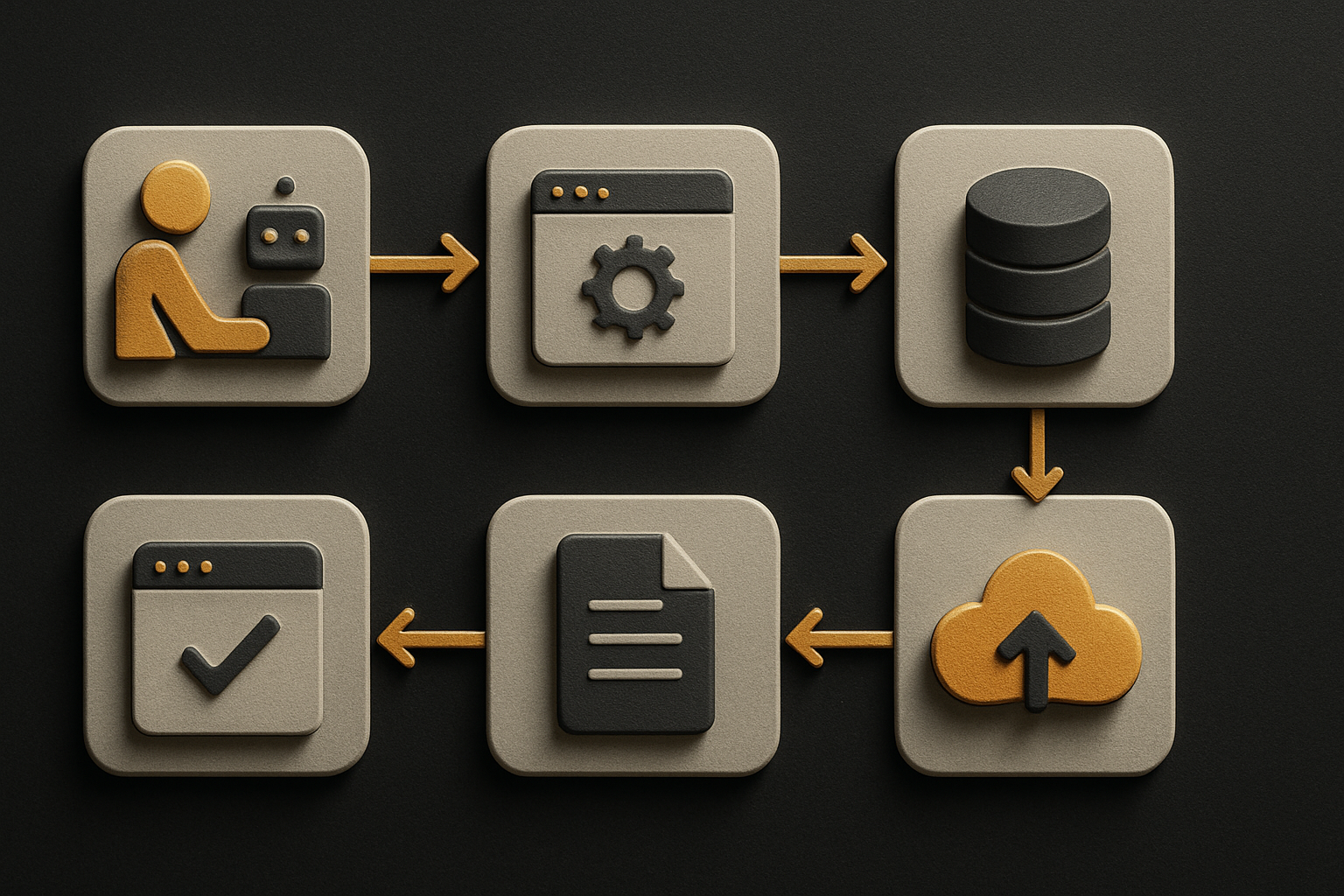
The two trends compound. Faster code production means more surface area per day. Slower code review means more of that surface area ships unvetted. Bright Security's analysis points out that AI-driven code introduces vulnerabilities at a rate similar to or greater than human-written code — so the volume problem is also a quality problem.
This is where AI applied to the testing side earns its keep. AI-assisted security tools do three things a static ruleset can't:
- Prioritisation by exploitability, not just severity. A "high" CVE in an unreachable endpoint is not the same as a "medium" finding on an authenticated admin route. AI triage can downrank noise and uprank real attack paths.
- Lower false-positive rates. Traditional DAST floods teams with "possible SQL injection" findings that turn out to be parameterised queries. ML-tuned scanners learn the shape of a real finding in your application and stop firing on the framework's escape routines.
- Reach across the long tail of findings. A pentester reads the report. An AI analyst reads every finding, scores it, and routes it to the right team's queue. That coverage is what makes "scan every build" economically viable at all.
None of this replaces a human reviewer. It makes the human reviewer faster, which is the only thing that scales against AI-generated code volume.
A realistic rollout
If you want to actually adopt continuous AI-driven security testing, the order matters. Here's the sequence that survives contact with a real enterprise:
- Map your real attack surface. You can't scan what you don't know about. Inventory every public-facing app, every staging environment exposed to the internet, every internal API reachable from a compromised developer laptop.
- Pick one high-traffic app to pilot. Don't start with the legacy SOAP service nobody has touched in five years. Start with the customer-facing app that's deployed weekly.
- Wire the scanner into CI. The example workflow above is the minimum viable version. Add auth, add a
--fail-onpolicy, and make the scan a required check. - Tune the policy for two sprints. Expect a flood of findings in week one. Most will be false positives or known-accepted risks. Tune the rule set, document the exceptions, then re-enable
--fail-on. - Add a human in the loop for high-severity. Anything rated critical should require a security engineer sign-off before the build is allowed to merge. That's the part that keeps trust in the loop intact.
- Roll out to the next app. Repeat, with the previous app's tuning file as the starting point.
The teams that fail at this aren't the ones that pick the wrong scanner. They're the ones that try to roll out across 200 services at once and drown in findings. The pilot-first pattern is non-negotiable.
The part that doesn't change when the tools do
Continuous AI security testing is a real shift, and Bright Security's analysis is naming the category correctly. It's also still AppSec — and AppSec is still a problem of who owns what when a finding lands. The scanner changes, the AI vendor changes, the policy format changes every eighteen months. What's durable is the wiring between your deploy pipeline and your security team, and the engineering discipline that says "findings without owners don't count as fixed."
That's where the same logic that makes a cross-platform component stack durable starts to apply to the security stack: the scanner is a tool, the policy is a config file, the deploy loop is the API. The pipeline you build around them is the asset. A component that ships to web, iOS, and Android from a single source multiplies your attack surface by three. A component that's scanned by the same DAST policy in the same CI step on every platform keeps the security story the same across all three. That's the durable layer — one pipeline, one policy, one place to triage — underneath whatever scanner or AI vendor the next eighteen months brings.
Pick the scanner. Wire the pipeline. Tune the policy. The model will change again before your next pentest.
Ship the product, not the setup.
- 11 production screens — auth, billing, team, analytics, settings
- Real database, payments, and login — all wired on day 1
- AI configs pre-tuned so your agent extends instead of regenerates