
SpaceX Surges 4% on $60B Cursor Acquisition Progress

SpaceX is paying $60 billion for Cursor. That's not a typo. On August 10, 2026, shares of SpaceX closed up 4.23% on news that the deal could land by the end of the week — a category-leading developer tool with millions of users becoming a line item in an AI infrastructure budget that just grew sixfold in twelve months.
For the engineers who type into Cursor every day, the headline reads one of two ways. Either the tool you depend on is about to get the largest investment injection in its category, or the tool you depend on is about to be wrapped in quarterly earnings calls. Both can be true at once. The right move is the same either way: keep shipping, and harden the parts of your stack that don't change when the tool does.
That's the whole post in two sentences. Here's the longer version.
The deal, in the receipts
The numbers, straight from the August 10 report. SpaceX is acquiring Cursor for $60 billion. Shares closed at $138.74 on roughly 166 million shares traded. The trigger wasn't just the deal — initial post-IPO lockup expirations that began August 6 added fuel on top.
The bigger number is the one SpaceX was already spending. Q2 2026 capex on AI infrastructure hit $15.83 billion — a more than sixfold jump from a year earlier. Cursor isn't a science-fair acquisition. It's a load-bearing piece of an infrastructure strategy that was already shipping at scale.
CNBC reported the deal could close by the end of the week of August 10. At that price, it ranks among the largest technology acquisitions on record. Cursor has millions of users — it's the most-deployed AI coding assistant in production today, which is exactly why a $60B price tag makes sense for a buyer whose AI division needs a real working developer surface, not a research demo.
Why a rockets-and-starlink company is buying a code editor
Read the rationale the way a senior engineer would read it. SpaceX's AI division needs three things: a tool already deployed at scale, a product surface its own engineers can extend, and a brand that recruits. Cursor hits all three. The "AI coding assistant used by millions" line in the announcement is doing real work — it's the same logic that made GitHub valuable to Microsoft. You don't buy a coding tool to use it. You buy it to put your name on the thing every developer touches first.
For Cursor's existing users, this is the best-case scenario for a category leader. The company just got a multi-year R&D budget and a parent whose AI capex grew 6x. The things that make Cursor good today — model routing, context management, the editor surface — keep getting investment, not cost cuts. Treat that as a tailwind, full stop, before any "but."
11 production screens. Login, database, payments — all wired.
The SaaS Dashboard Kit ships everything already connected. Nothing to set up. Live demo at saas.otf-kit.dev.
How to use Cursor harder right now
If you're already on Cursor, the deal doesn't change your workflow this week. It does change which knobs are worth turning today so you're not stuck when they do.
Pin your model in .cursor/config.json rather than letting the default float. The model layer will churn — SpaceX's AI roadmap makes that near-certain — and your config is the one place a single edit can keep your workflow stable through every swap.
{
  "model": {
    "default": "anthropic/claude-sonnet-4.5",
    "fallback": ["openai/gpt-5", "google/gemini-2.5-pro"]
  }
}
If you're routing through OpenRouter, set the base URL once and forget it:
export OPENROUTER_BASE_URL="https://openrouter.ai/api/v1"
export CURSOR_API_BASE="$OPENROUTER_BASE_URL"
That decouples your editor from any single provider's pricing changes, which is exactly the kind of churn a $60B acquisition tends to produce.
One more concrete move. Put your prompt rules in .cursor/rules/, not in chat history:
# repo rules
- no new dependencies without a `pnpm` reason in the PR body
- all API routes return a typed error, never throw at the edge
- mobile components come from @otfdashkit/ui, not hand-rolled
Cursor reads these every session. They're the part of your setup that survives a model upgrade, a pricing change, and a corporate reorganization.
What this deal doesn't change
Here's the part that holds regardless of who owns Cursor, what model Cursor ships next, or whether SpaceX decides to spin the product into Starlink-adjacent tooling.
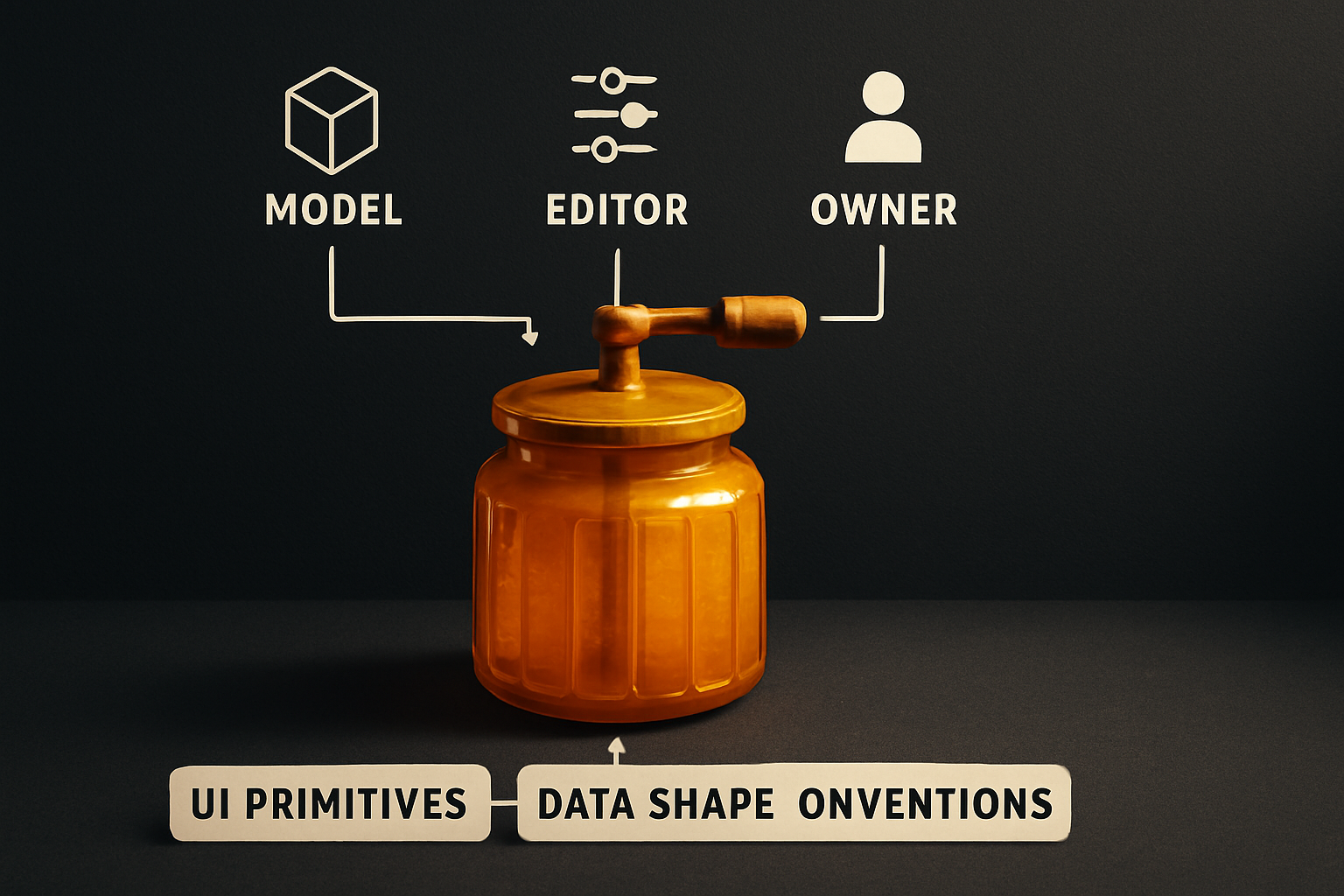
The UI layer you build on top of Cursor is the durable artifact. Cursor writes code; it does not decide what your components look like on web, iOS, and Android. That's your job, and the layer you choose for it is the layer that survives model churn, acquisition churn, and pricing churn.
Most teams handle this by maintaining three component trees — one for web, one for iOS, one for Android — and praying Cursor stays consistent across all three. It won't. The first time you ask Cursor to "match the iOS version of this card on the web app," you'll get three components that drift apart within a quarter. The diff in your repo will prove it.
The teams that don't drift pick a layer where one component definition produces one rendering per platform from a single source. OTF gives you exactly that: the same component looks and behaves the same on web, iOS, and Android — one API, one source of truth, one place Cursor writes to. Cursor can swap models underneath you; the components you ship don't move.
That's the line in the sand. Above it: tool churn. Below it: the durable layer.
What to watch over the next 90 days
Three signals will tell you whether the $60B was a buy-and-accelerate or a buy-and-restructure.
-
The Cursor changelog. Watch the cadence of model additions and the speed at which new Anthropic, OpenAI, and Google models show up. If the cadence holds or accelerates, the product is being left alone. If it slows, priorities have shifted.
-
Pricing. Cursor's existing tiers are the cleanest signal of acquirer intent. A freeze with continued investment is status quo. A new enterprise tier tied to SpaceX AI services is the product being repositioned as an upsell surface. A free-tier downgrade is cost-cut.
-
Hiring. Cursor's engineering job board tells you what the acquirer plans to build. If "model routing" and "context windows" are still the open roles, the product roadmap is intact. If "Starlink integration" or "internal tools" start appearing, the product is being redirected.
None of these tell you to leave Cursor. They tell you to keep the part of your stack that doesn't depend on the answer.
The lesson, restated
A $60B acquisition validates Cursor the product, not Cursor the specific code generation output. The output is what changes every quarter when a new model ships; the product — the editor surface, the routing, the user base — is what gets valued at sixty billion dollars.
Build on the part that survives the swap. Use Cursor harder than you've been using it, route your models through a base URL you control, put your rules in files instead of chat history, and let the components underneath the editor be the thing your team actually owns. Everything above the durable layer is negotiable. Everything below it is yours.

Ship the product, not the setup.
- 11 production screens — auth, billing, team, analytics, settings
- Real database, payments, and login — all wired on day 1
- AI configs pre-tuned so your agent extends instead of regenerates