
Lovable Soars to $13.3B Valuation as AI Coding Demand Surges

Vibe coding just got a $13.3B vote of confidence
Lovable AI just doubled its valuation to $13.3B this week, on a $400M Series C led by Menlo Ventures and co-led by EQT's Scaleup Europe Fund (one of the European fund's first major bets). That is not a market quirk — it's the clearest signal yet that AI-native software creation has stopped being a prototype trick and become a category with real capital behind it.
The round brings in new backers Balderton Capital, Carmignac, Kaszek Ventures, LTS Growth, Tencent, World Innovation Lab, and Regent. Existing investors Accel, Antler, CapitalG, DST Global, Evantic Capital, HubSpot Ventures, and Salesforce Ventures also participated.
Why this matters for builders: the round-trip from "I want an app" to "an app is running" is collapsing fast. Per Lovable, more than 60 million projects have been built on the platform since launch. Those projects now pull in over 900 million visits per month. The company also says nearly two-thirds of the Fortune 500 now have employees building on Lovable, up from roughly half less than a year ago. Customers named in the funding story include Adidas, NVIDIA, Deutsche Telekom, Zendesk, and Handshake.
Thesis sentence, stated bluntly: vibe coding is no longer the prototype layer. It is becoming the shipping layer.
(That was the upside. Now the part that's still missing.)
What Lovable actually does
Lovable is an AI-native software creation platform, founded by Anton Osika and Fabian Hedin and launched publicly in November 2024. You describe what you want — "a CRM with a kanban view and Stripe billing" — and the AI generates the code. The phrase that has stuck for this style of building is "vibe coding"; Lovable has positioned itself at the center of the movement.
What changed over the past several months — and what justifies the valuation doubling — is the surface area. Lovable now ships:
- Payment functionality
- SEO and AI-search tools
- Integrations with Google Workspace, Microsoft 365, Salesforce, Stripe, ElevenLabs
- Automated security scanning
- Enterprise governance features
The ambition stated in the funding news is unambiguous: Lovable wants to be a platform for running businesses on top of, not just a tool for shipping software.
11 production screens. Login, database, payments — all wired.
The SaaS Dashboard Kit ships everything already connected. Nothing to set up. Live demo at saas.otf-kit.dev.
How to actually use it today
The killer question. Here is the shortest path from idea to running app.
# 1. Sign up at lovable.dev — GitHub OAuth is the fastest route (~30 seconds)
# 2. Click "New project"
# 3. Describe the app in plain English
A real prompt I'd use to test a new account:
Build a customer-feedback dashboard.
- Sidebar with filters: rating, date range, tag
- Table of feedback rows from a Supabase table called "feedback"
- Line chart of weekly average rating above the table
- Auth required; only signed-in users see data
- Minimal style, dark mode preferred
Lovable returns a working preview in roughly a minute. The file tree lives on the left, a live preview in the middle, a chat panel on the right for "make the chart taller" / "add a column" / "fix the mobile layout."
For a real project the loop is:
- Sign up (GitHub OAuth, ~30s).
- New project → describe it → preview in ~60s.
- Iterate via chat — "add admin role," "swap auth to Clerk."
- Sync to a GitHub repo (one click) — version control you actually own.
- Connect Stripe / Google Workspace / Salesforce / ElevenLabs from the integrations panel.
- Deploy from the same screen.
The integrations matter more than they sound. They are exactly what lets Lovable cross the line from "the fastest demo on the internet" to "a serious platform." Treat the GitHub sync as non-optional from day one — it is the cleanest escape hatch you have.
The number worth paying attention to
Most Series C headlines read as valuation theater. The one statistic that deserves attention is 60 million projects in roughly 21 months. That is not a vanity stat — it implies a real retention curve. People who ship one project come back and start another. The 900 million monthly visits across those projects tell you the apps are not just being built; they are being shipped and used.

Fortune 500 penetration is the harder number to fake. Two-thirds of the F500 now have employees building on Lovable, per the company; last quarter that was around half. The strongest enterprise use cases — internal tools, customer portals, ops dashboards — are exactly where natural-language generation compresses the most overhead.
What this round does not solve
Here is the honest part. A $13.3B valuation validates that vibe coding is a real platform shift. It does not validate that the code Lovable generates will survive the next three years of churn that hits any business-critical app.
The components are web-first. If your customer wants native iOS and Android, you are looking at two more codebases. The auth and data layer is convenient; if your security team asks for an audit log of row-level access on a Postgres table, you will want more than a checkbox in the integrations panel. The third-party integrations are excellent for the first six months and thin when you need a custom Okta SAML setup, a HIPAA BAA, or a payment retry policy that does not match Stripe's defaults.
Lovable was last valued at $6.6B in December 2025, when it raised $330M. So the valuation has more than doubled in eight months. That's a real read on demand; it is not yet a read on durability.
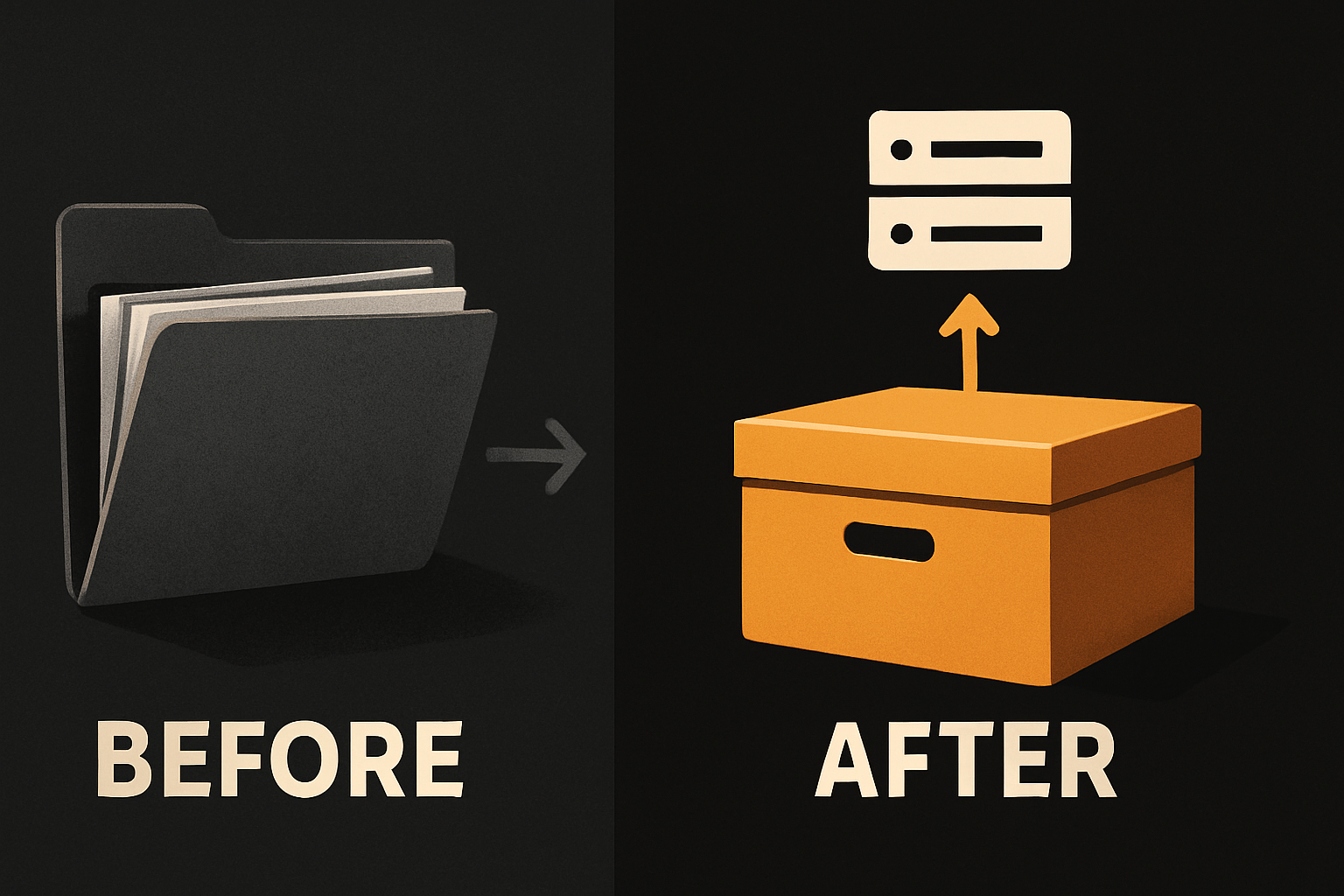
In other words: Lovable has cracked the "0 → app in an afternoon" stage. The stage it has to crack next is "app → production app that survives contact with real customers on every platform, with audited auth, owned data, and a team that can maintain it."
That durable layer is the thing underneath the tool churn. It is the part that does not change when the model does, when the editor swaps, when a new $13B-funded competitor appears next quarter.
What this enables for builders

Three concrete moves to make today:
- Build the prototype in Lovable. The round-trip from prompt to working preview is the fastest in the industry — use it.
- Sync to GitHub on day one. The export is one click; the lock-in is whatever you let it be.
- Decide upfront which layer is yours. The shell, the routes, the auth wiring — that lives in your repo, audit-friendly, and should land natively on every device your customers use. The business logic that does not need a mobile shell yet can stay in the prompt-and-iterate loop longer.
The builders who win the next 18 months will treat vibe coding platforms as a serious first-draft tool with a clean escape hatch, not as the final layer of their stack. The builders who lose will treat the $13.3B round as proof that the prototype is the product.
It is not. The product is what survives the next reorg, the next compliance review, the next "we need this on iOS too."
Use the round. Then own the layer under it.
Lovable's $400M Series C at $13.3B is a market verdict, not a hype artifact. Vibe coding is the new 0→1, and the round confirms it. What the round does not confirm is that the rest of the stack — cross-platform components, owned auth, durable data, audited deploys — has been solved.
Use Lovable. It is genuinely impressive, it has crossed the line from prototype to platform, and the integrations are no longer an afterthought. Then make sure the layer underneath your prototype is something you own, that survives the platform churn, and that lands on every device your customers actually use.
That is the part that does not change when the next $13.3B round lands.
Ship the product, not the setup.
- 11 production screens — auth, billing, team, analytics, settings
- Real database, payments, and login — all wired on day 1
- AI configs pre-tuned so your agent extends instead of regenerates